
Last updated November 18, 2026
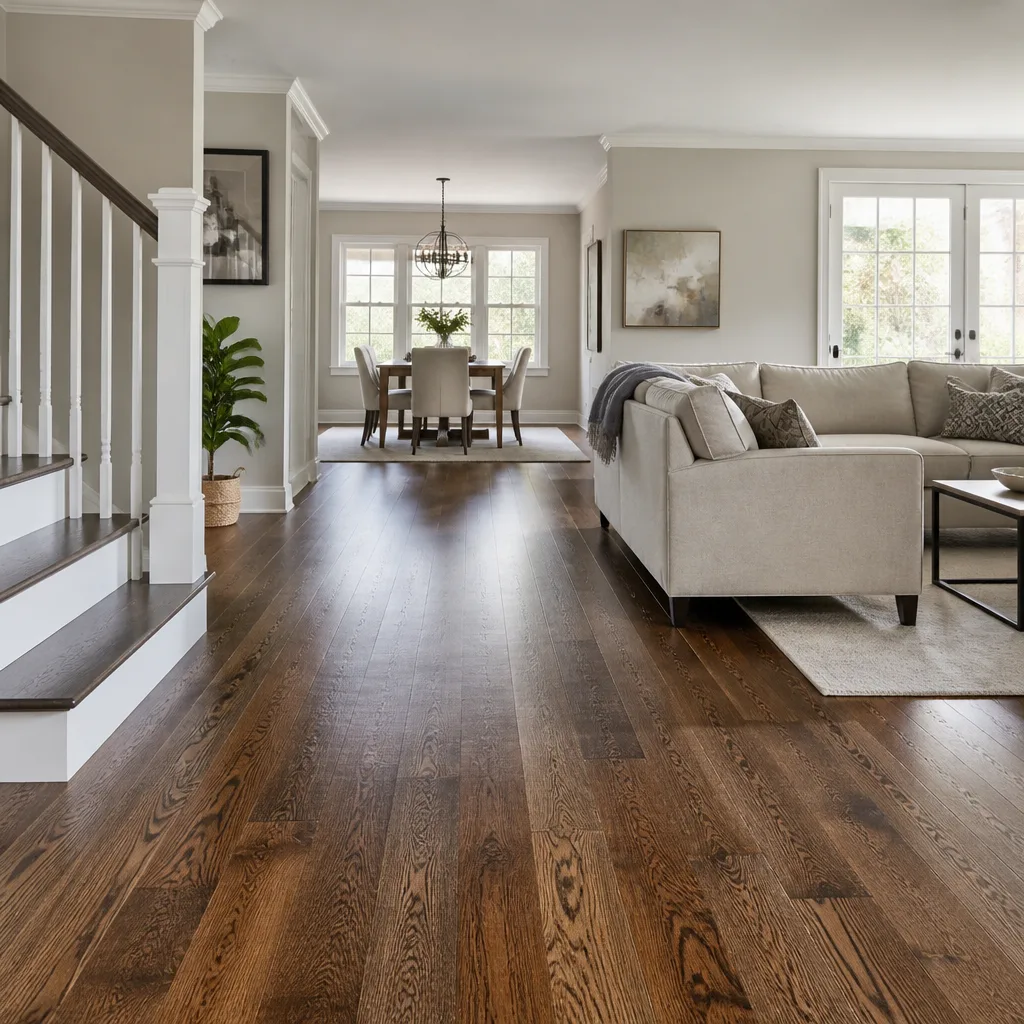 Hardwood
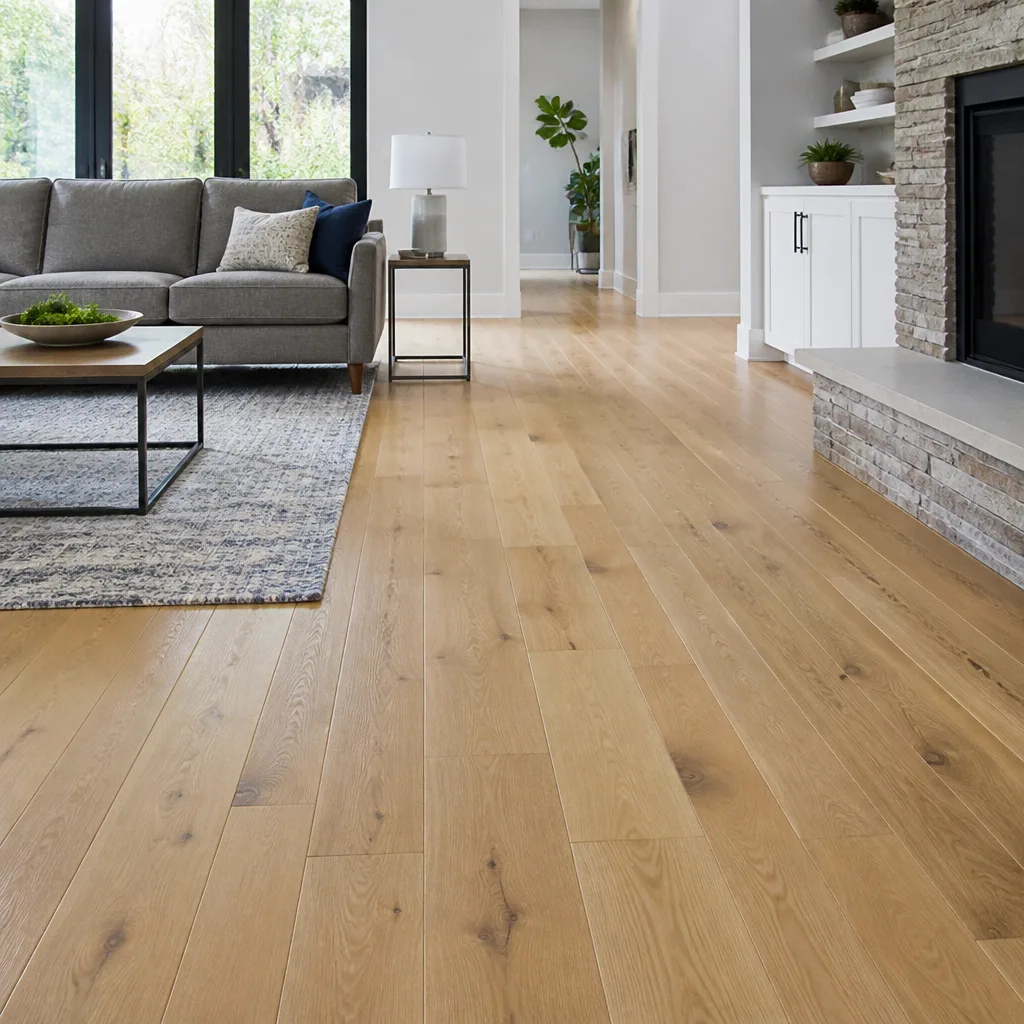 Engineered hardwood
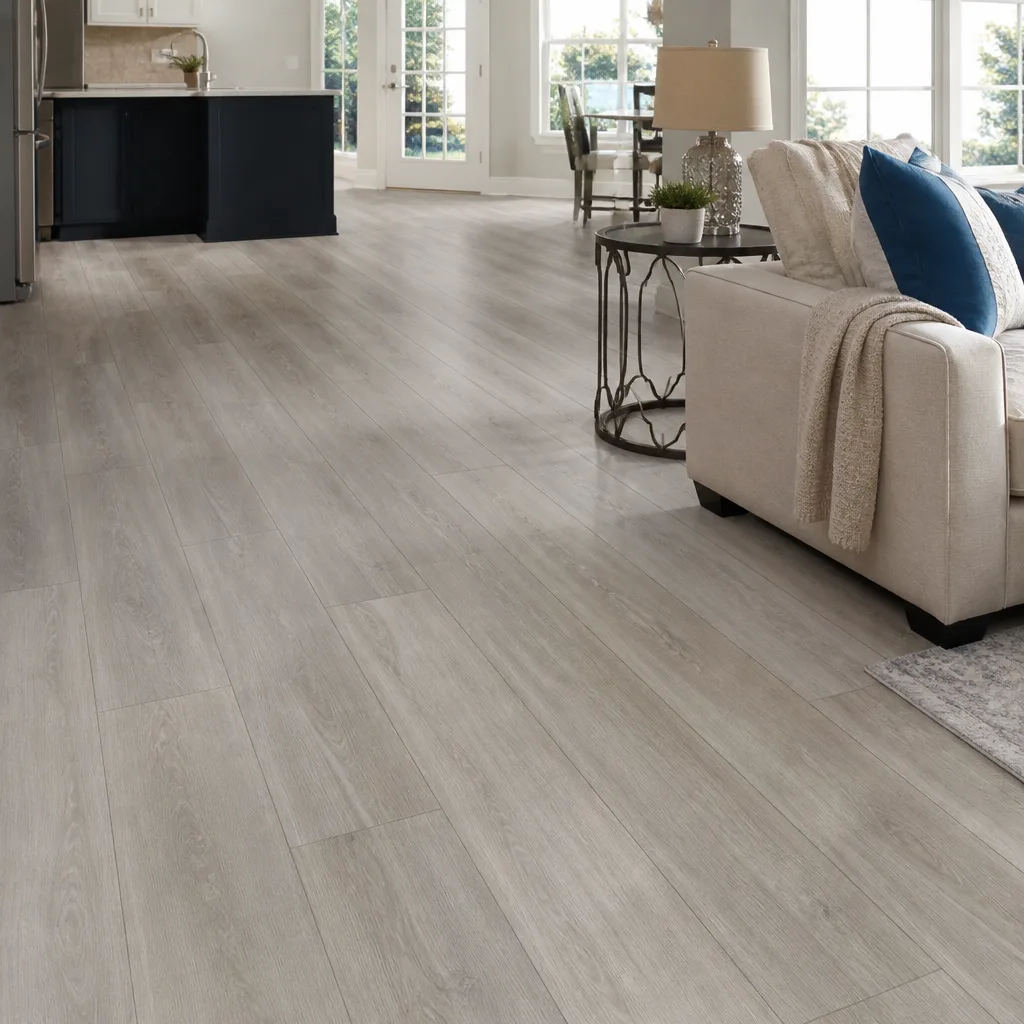 Luxury vinyl plank
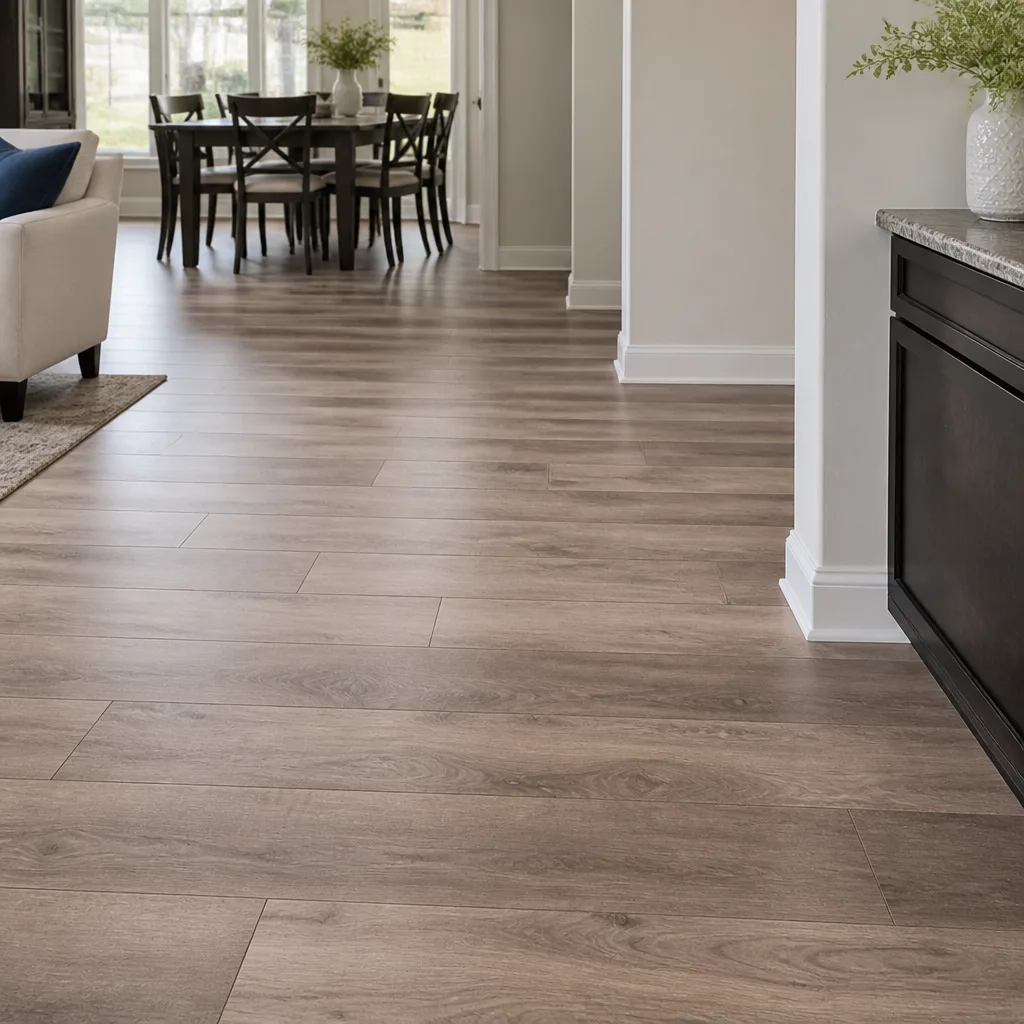 Laminate
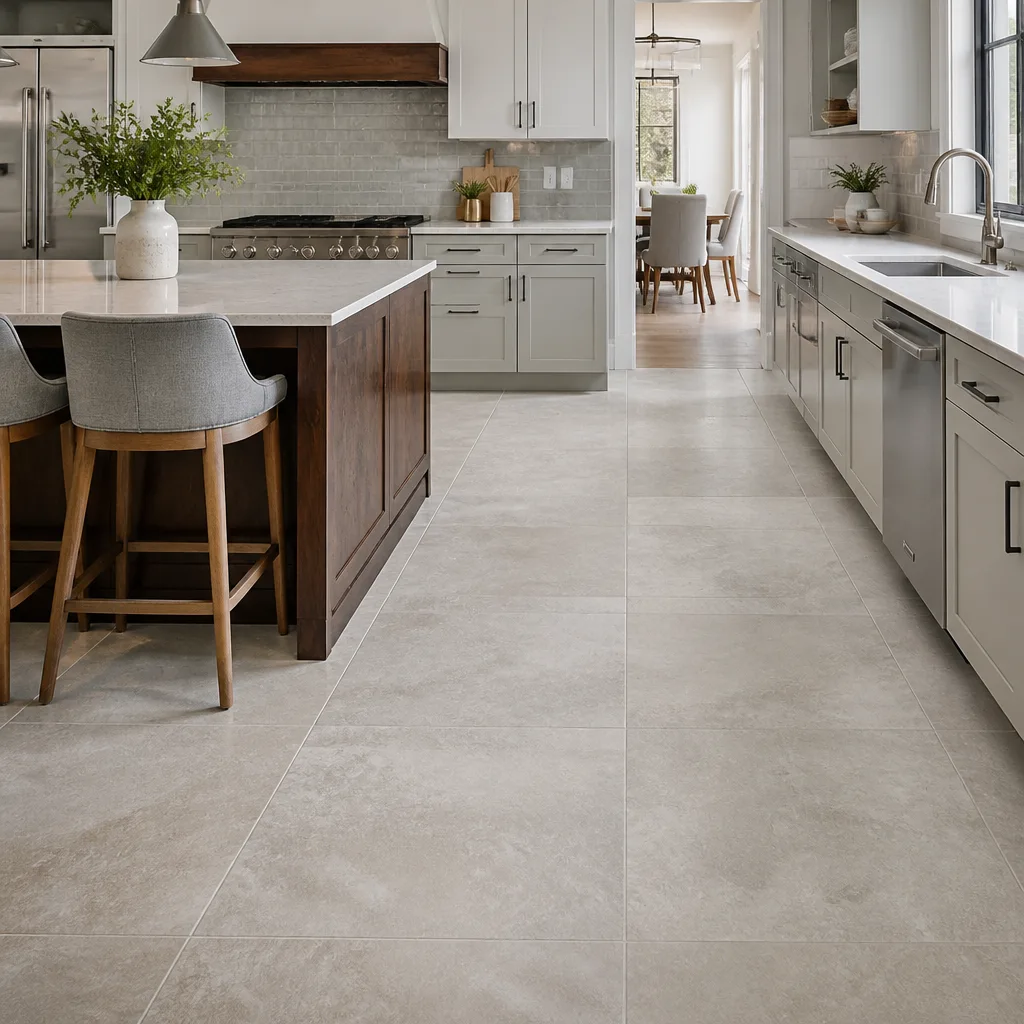 Porcelain tile
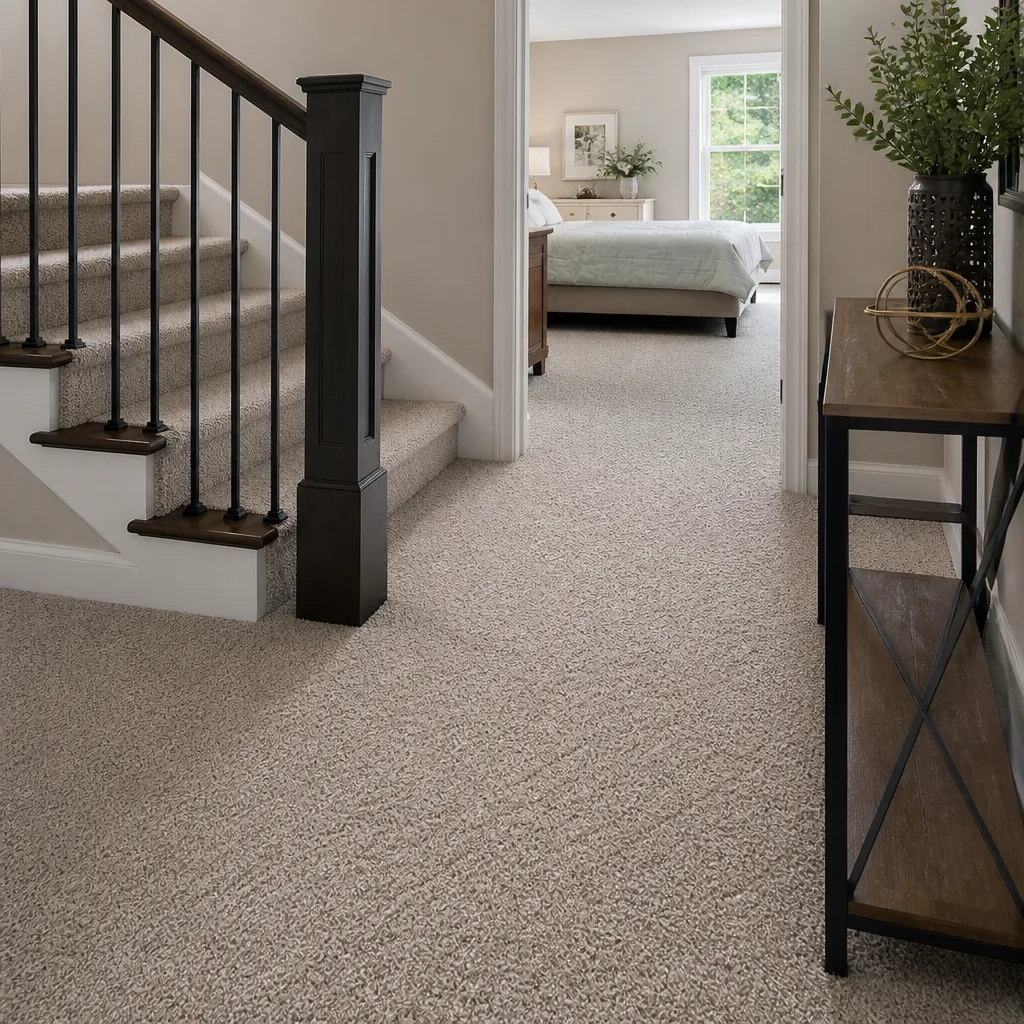 Carpet
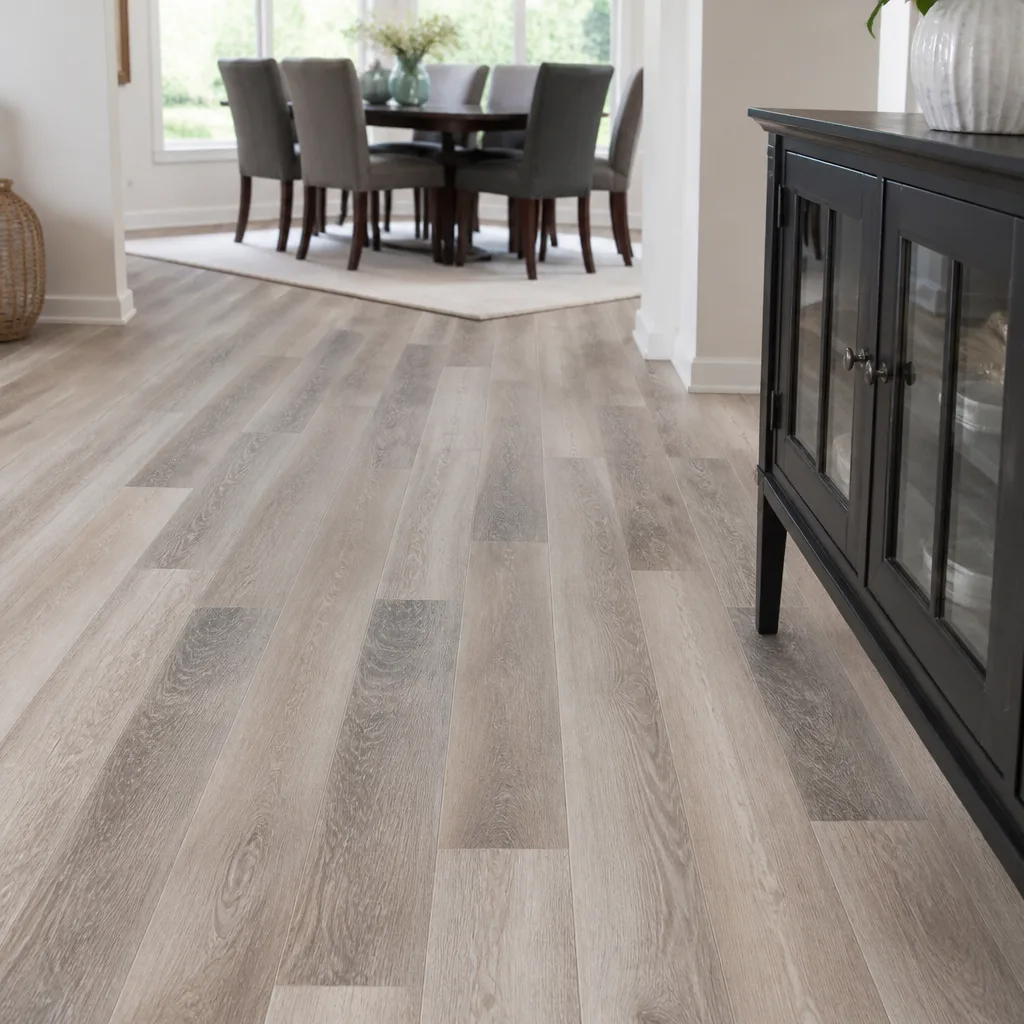 Shaw
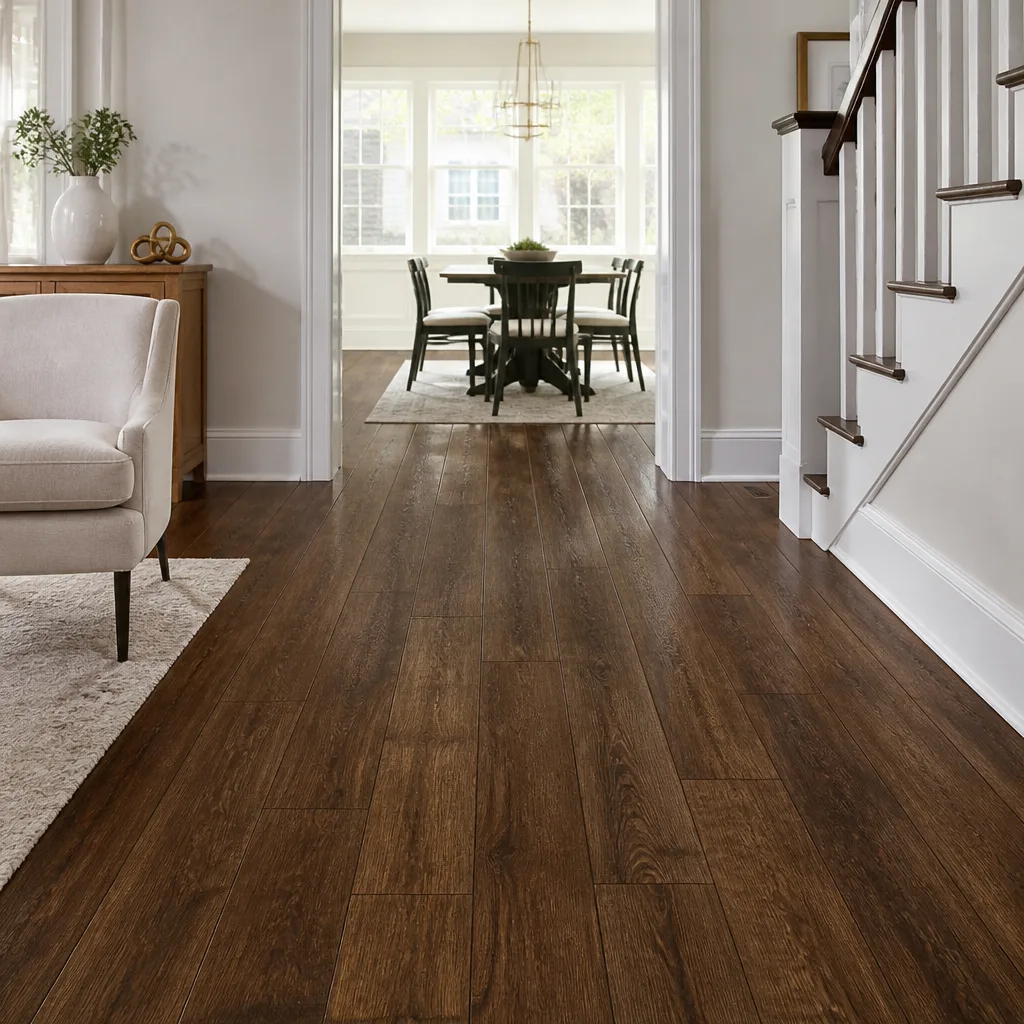 Mohawk
 COREtec
 Pergo
Free in-home measure and written estimate: Shaw, Mohawk, COREtec and Pergo lines compared on your own rooms, with carpet, tile, vinyl plank, laminate and hardwood laid out side by side
Get your free estimateFlooring Cost Breakdown: The Summerlin Homeowner’s Reference for 2026
Here’s the number most Summerlin homeowners never see until the contract is already signed: the price on the tag isn’t the price you pay. That $3.49 per square foot luxury vinyl plank you saw at the warehouse store can land at $7.80 installed once concrete grinding, self-leveling compound, and transition work are added in. Suddenly it costs nearly as much as a mid-grade product that needed none of that prep. The material was never the whole story. This guide breaks down every line item in a Summerlin flooring estimate so you can compare bids on equal footing, spot what’s missing, and understand exactly where your money goes in 2026.
Quick Answer
Flooring installation in Summerlin in 2026 typically runs $4 to $9 per square foot installed, with material and labor included; carpet sits at the low end, tile and LVP in the middle, and hardwood refinishing priced separately per square foot. The gap between two bids is almost always in the prep work, disposal, and trim rather than the flooring itself. Get every line itemized in writing before you sign, and the final price is whatever that written estimate says.
Styles & brands we work with
- Hardwood
- Engineered hardwood
- Luxury vinyl plank
- Laminate
- Porcelain tile
- Carpet
- Shaw
- Mohawk
- COREtec
- Pergo
Table of Contents
- The Seven Line Items in Every Summerlin Flooring Estimate
- Why Summerlin Slabs Add Prep Cost You Won’t See on the Tag
- How to Read a Flooring Estimate (What’s Excluded vs. What’s Unknown)
- Cost Per Year: Why $6 Beats $3.50 Over Time
- Cost Ranges by Room: Kitchen, Master Suite, Staircase
- Comparing Nine Brands in One Conversation
- Refinish Before You Replace: The Hardwood Math
- What to Check Before You Hire Any Installer
The Seven Line Items in Every Summerlin Flooring Estimate
A realistic 2026 flooring estimate in Summerlin reads like a recipe, not a single number. The material is one ingredient among seven, and the other six are where bids diverge. Here’s the anatomy we walk every homeowner through before a single box is opened.
- Material – the flooring itself, priced per square foot plus a waste factor (usually 5 – 10% for straight-lay, more for diagonal or patterned layouts). In the Summerlin market, carpet runs roughly $2 – $5 per square foot for material, tile $3 – $8, and LVP or laminate $3 – $7.
- Padding or underlayment – relevant for carpet and some floating floors. Budget around $0.50 – $1.50 per square foot. Attached-pad carpet can reduce this line; tile set over a slab usually doesn’t need it at all.
- Demo and haul-away – removing the old floor and getting it off your property. Typically $0.75 – $2 per square foot. Tile demo costs more than carpet demo because it’s bonded and chipped out.
- Subfloor leveling – the wildcard. On a flat slab, this line is close to zero. On a slab with dips and humps, it can add $0.50 – $1.50 per square foot or more.
- Installation labor – the craft itself. Carpet and LVP typically land around $1.50 – $3 per square foot, tile $4 – $9 depending on format and pattern, and these ranges reflect the Summerlin labor market in 2026.
- Transitions and thresholds – the strips that bridge flooring to tile, carpet, or doorways. Budget roughly $40 – $120 per transition, more for custom-milled pieces at stair noses and unusual angles.
- Finishing trim – baseboards removed and reset, quarter-round, and stair trim. Roughly $3 – $8 per linear foot, and easy to leave off a quote if you don’t ask.
Add those seven lines and you’ll land close to the true installed number. Skip any one of them on a comparison sheet and you’ll be comparing two bids that don’t measure the same scope. That’s the whole game with flooring quotes in Summerlin: not which number is lower, but which number is honest.
Why Summerlin Slabs Add Prep Cost You Won’t See on the Tag
Most Summerlin homes sit on concrete slabs rather than raised wood framing. That matters more than it sounds. Carpet and hardwood can absorb some imperfect framing. A slab does not forgive a hump, and many older Summerlin tracts show flatness variance that only reveals itself once the old floor is up.
Here’s the sequence that drives the added cost:
- Demo exposes the slab. Until the carpet or old tile is gone, nobody, including the most experienced estimator, knows what the concrete looks like underneath.
- Flatness is checked with a straightedge. A low spot or a rise outside what the flooring product’s instructions allow has to be corrected before anything new goes down.
- Grinding or topping compound gets applied. High spots get ground down; low spots get self-leveling compound poured and troweled flat.
- The correction cures before the new floor goes on. The schedule is set at the estimate, and the exact cure timing depends on the product and the slab.
That prep adds roughly $0.50 – $1.50 per square foot on a typical Summerlin slab with moderate variance, sometimes more if the correction area is large. Why does it matter so much here? Summerlin’s desert climate and the way concrete slabs behave seasonally mean thermal movement and hairline cracking are part of the landscape; a slab that looked flat a decade ago can shift. When a bid comes in conspicuously low for a tile install, slab prep is usually the line that got dropped. Ask specifically how the flatness will be checked and what happens if it’s out of tolerance. The answer tells you whether the estimate you’re holding is a real number or a starting point.
How to Read a Flooring Estimate (What’s Excluded vs. What’s Unknown)
The single most useful skill in this whole process is telling the difference between two things that look identical on paper: something legitimately excluded, and something not yet known. A good estimate calls out both. A lazy one hides them behind one line that says “install – $X.”
Legitimately excluded means the installer knows it’s outside the scope and is telling you so: furniture moving, appliances you’ll handle yourself, baseboard replacement if you’re changing the base profile, and any structural repair discovered mid-job. These are honest exclusions. You can see them, plan around them, and price them out separately.
Not yet known means nobody can quote it accurately until demo: how much slab leveling will be needed, whether a soft spot shows up in a subfloor, or whether old adhesive requires mitigation. A professional estimate says this plainly, isolating those unknowns as a line-item allowance rather than pretending they don’t exist. That’s how we write ours.
When you compare bids, put them side by side and look for a written scope that numbers the seven line items from earlier. Two honest quotes for a tile tile flooring installation will differ by a few percent, not by thousands. A gap that large usually means one bid is silent on demo, slab prep, or trim. Ask each contractor the same four questions and compare answers, not totals:
- Is demo and haul-away included, and at what rate?
- How do you handle slab flatness, and what’s the allowance for correction?
- Are transitions, thresholds, and baseboard reset in the price?
- What does the waste factor assume, and is the material price locked to the day of installation or the day of the quote?
Cost Per Year: Why $6 Beats $3.50 Over Time
Homeowners naturally shop the number on the shelf. We’d argue that floor should be priced per year, not per square foot. Take a $6 per square foot installed LVP carrying a 25-year wear warranty from a manufacturer like COREtec, and put it next to a $3.50 per square foot option that gets replaced in 8 years. Do the division and the “cheaper” floor costs more every year you live on it.
The math:
- $6.00 installed, 25-year wear warranty: roughly $0.24 per square foot per year.
- $3.50 installed, replaced in 8 years: roughly $0.44 per square foot per year, before you count the second demo and the second install.
That’s before factoring in the labor to tear the cheaper floor out and install again, which you pay a second time. A mid-grade product that performs also tends to sit on a properly prepped slab, which is why the recipe so often rewards paying more for one floor instead of paying twice for two. None of this means the entry-level option is wrong. It means the entry-level option should be a deliberate choice – for a rental, a short-term room, a budget stretch – not a default driven by the tag. Brand matters here because recognized manufacturers tend to publish consistent product data you can compare, which is one reason our portfolio includes Shaw, Mohawk, Karndean, and COREtec side by side. When the warranty and the wear layer are stated plainly for each, the per-year math gets honest fast. Just remember that the product instructions and the written estimate, not a showroom guess, set the final spec.
Cost Ranges by Room: Kitchen, Master Suite, Staircase
Whole-home estimates get easier once you break the budget room by room. Scope, pattern, and fixture cuts drive the price more than raw square footage. Here are the ranges we see across Summerlin 2026 projects, all figures estimated and confirmed by written quote:
- Kitchen (roughly 200 square feet): the most fixture-dense room in the house – cabinet toe-kicks, appliance cut-outs, transitions to adjacent rooms. Expect tile in the $1,800 – $4,500 range depending on format and pattern, or LVP/laminate installed in the $1,200 – $2,600 range. Island and cabinetry re-setting is usually quoted separately if needed.
- Master suite (roughly 350 square feet): usually a straightforward rectangle, so material choice drives cost more than labor. Carpet with pad typically runs $1,400 – $3,200 installed; LVP/laminate $1,800 – $3,500. Fewer transitions, fewer surprises.
- Staircase (a flight of 13 – 15 risers and treads): the most labor-intensive space per square foot you own. Stairs are hand-fitted, have returns and nosings, and can’t be rushed. Plan for $100 – $250 per step installed in carpet or LVP, more in tile or hardwood, driven by hand-cut treads and stair trim. This is where a cheap bid tends to reveal itself.
Prioritize like this: floors you’ll replace soonest last, floors you’ll live on for decades first. A carpet installation in the primary bedrooms and a long-life hard surface in the hallways and kitchen tends to be the money-smart sequencing for a whole-home Summerlin refresh. Doing the labor-intensive rooms once, correctly, saves more than chasing the lowest per-square-foot price on every room. The right floor for how that room actually lives is always cheaper than the wrong one installed twice.
Comparing Nine Brands in One Conversation
Most homeowners we meet have already shopped three or four stores before calling us, and they arrive with three or four per-square-foot prices that aren’t actually comparable: different wear layers, different included services, different warranty terms, different waste factors. So the useful exercise isn’t to see more showrooms – it’s to line up the real options in one place. We carry lines from Shaw, Mohawk, COREtec, Pergo, LifeProof, Mannington, Armstrong, Daltile, and Karndean, which spans carpet, tile, LVP, laminate, and hardwood categories. That means nine brands, one conversation.
Why does that save money? Because brand depth lets us match the material to the budget honestly instead of steering you toward whatever a single store stocked:
- Carpet: Shaw and Mohawk give you two large manufacturer portfolios to compare on face weight, fiber, and price point without leaving the room.
- Tile: Daltile, the largest tile manufacturer in North America, alongside Armstrong, covers everything from large-format porcelain to classic patterns.
- Resilient: COREtec and Karndean sit at the premium end of luxury vinyl plank, while LifeProof and Pergo cover the value and mid-range, so the per-year math from earlier can be run against four real options at once.
The ability to weigh a Karndean against a COREtec against a LifeProof on the same day is what lets a Summerlin homeowner see the true trade-offs. We install it, so we know what performs – and where a premium product delivers over the long haul versus where it’s simply more money for the same result. A specialist then reads your rooms, your subfloor, and your plan, and recommends from there. That’s precision installation meeting material selection: the two halves of a floor that lasts.
Refinish Before You Replace: The Hardwood Math
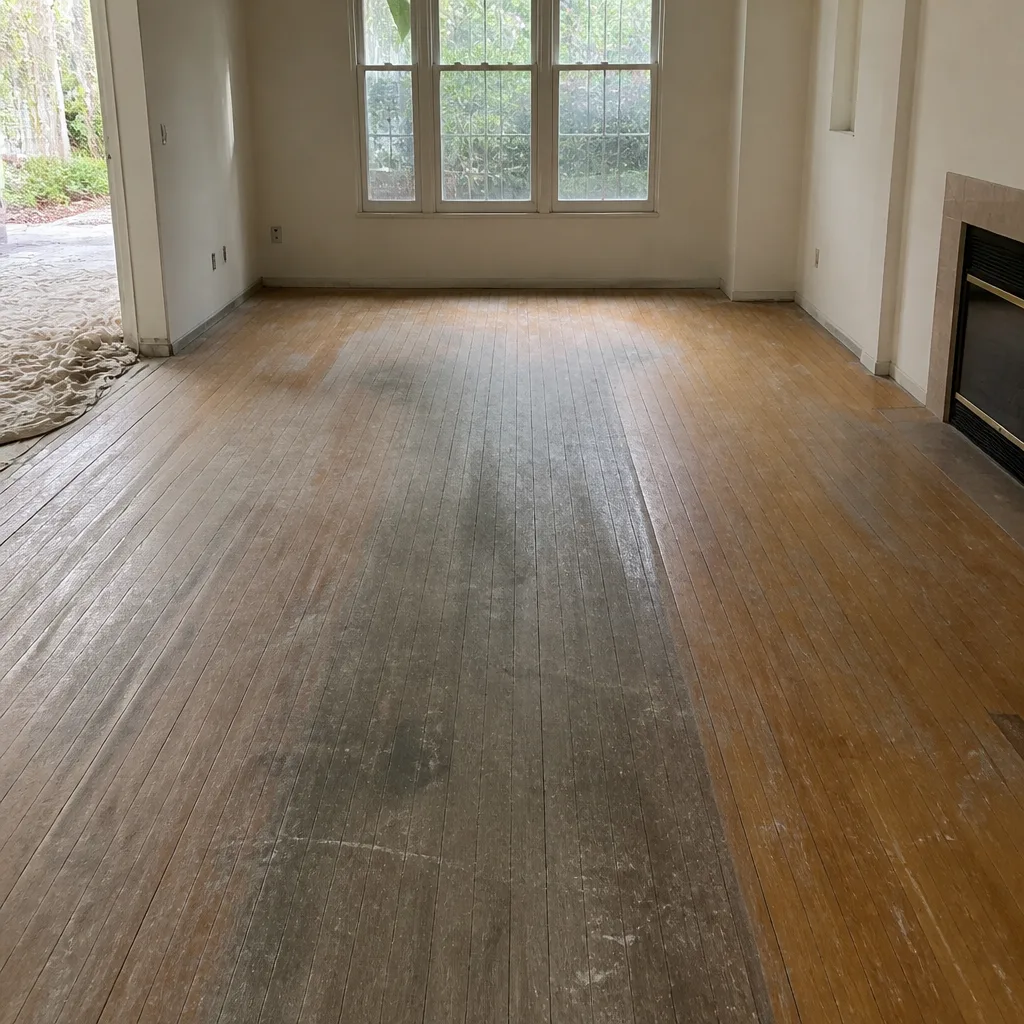
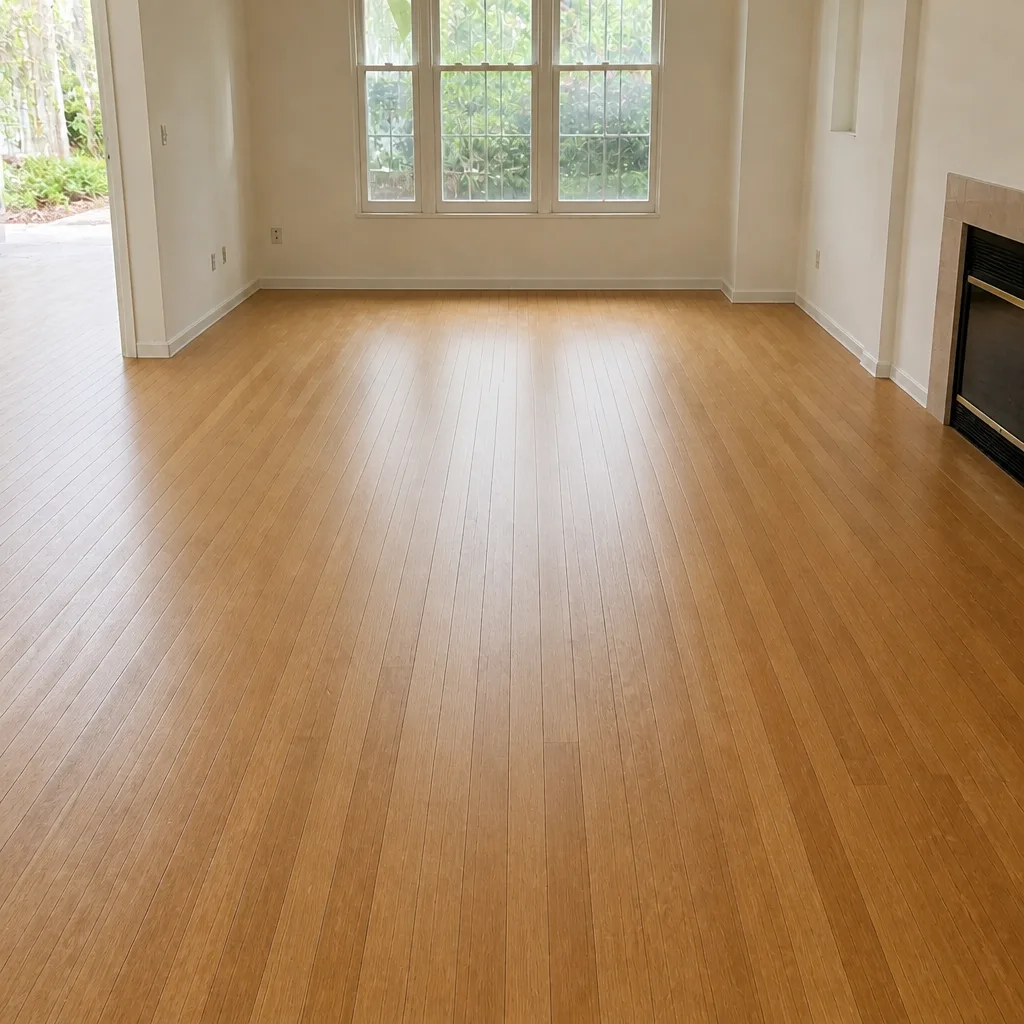
If you already have hardwood in Summerlin, the cheapest “new floor” in your house may be the one that’s already underfoot. Refinishing is a specialized craft – sanding, staining, and finishing – and most flooring installers either outsource it or skip it entirely. We do it in-house because it belongs to the same discipline as everything else on this page: it’s a wood floor that needs expert handling.
The cost picture, estimated per square foot of floor area:
- Refinish and finish an existing hardwood floor: typically $3.50 – $6 per square foot in the Summerlin 2026 market, depending on the number of coats and whether a stain is applied.
- Full replacement with new hardwood: typically $8 – $14 per square foot installed, before demo and disposal of the old floor.
The math is usually two-to-one in refinishing’s favor. But it depends on the thickness of the wood and its condition – a floor that’s already been sanded thin or has cupping and damage may not be able to take another round, and that’s checked at the estimate visit. Never promise on a phone call that every floor can be refinished; any honest specialist will tell you the same. The other advantage of refinishing is scheduling: because it’s a booked job with a set cure sequence, it slots neatly into a room-by-room remodel. If you’re planning a whole-home project and your existing wood is thick enough, refinish before you replace and put the savings into the higher-traffic rooms. For everything else, our flooring installation Summerlin team can lay out a project plan, room by room.
What to Check Before You Hire Any Installer
A flooring job is only as good as the prep and the installer’s eye, so vetting matters more than the brand on the box. Before you hand anyone a deposit in Summerlin, run through this list:
- Ask for a written, itemized estimate. If it’s one lump-sum number, ask what it covers. Our Sandy Valley neighbors get the same itemized format; scope should always be visible.
- Confirm the license and insurance. Ask to see current proof. State-licensed and insured matters when someone is grinding a slab in your kitchen.
- Ask who does the work. Ask whether the crew laying the tile is the same crew that set the estimate, and whether refinishing (if relevant) is in-house or subbed.
- Ask what happens with unknown prep. A professional will explain flatness checking and how slab correction is priced, rather than promising a fixed number sight-unseen.
- Read the waste and disposal clauses. Confirm demo, haul-away, transitions, and trim are in writing, not assumed.
- Verify the product spec. Ask to see the product instructions for the floor being quoted; the written estimate and the manufacturer’s instructions set the final spec and the warranty terms.
Common Mistakes to Avoid
- Comparing total numbers instead of scope. Two bids for the same room can differ by thousands, with the whole gap sitting in demo, slab prep, and trim. Line the quotes up against the seven line items before you decide.
- Assuming the slab is flat. In older Summerlin tracts, concrete flatness variance is common and only reveals itself after demo. Leave room in your budget for prep.
- Pricing the floor per square foot instead of per year. A premium option with a long wear warranty usually costs less per year than a cheap floor replaced twice.
- Shopping five stores instead of one specialist. Different stores stock different brands, so comparison shopping across five showrooms is actually harder than sitting down with a specialist carrying nine lines.
- Forgetting delivery, waste, and disposal. The tag price omits 5 – 10% waste factor, delivery, and haul-away of the old floor; a real estimate includes all three.
- Ignoring stairs and transitions in the early plan. Stair trim and threshold pieces are hand-fitted and hand-priced, and skipping them early creates surprises late.
- Covering hardwood you could refinish. If the wood is thick enough and in decent shape, refinishing is typically half the cost of a full hardwood replacement.
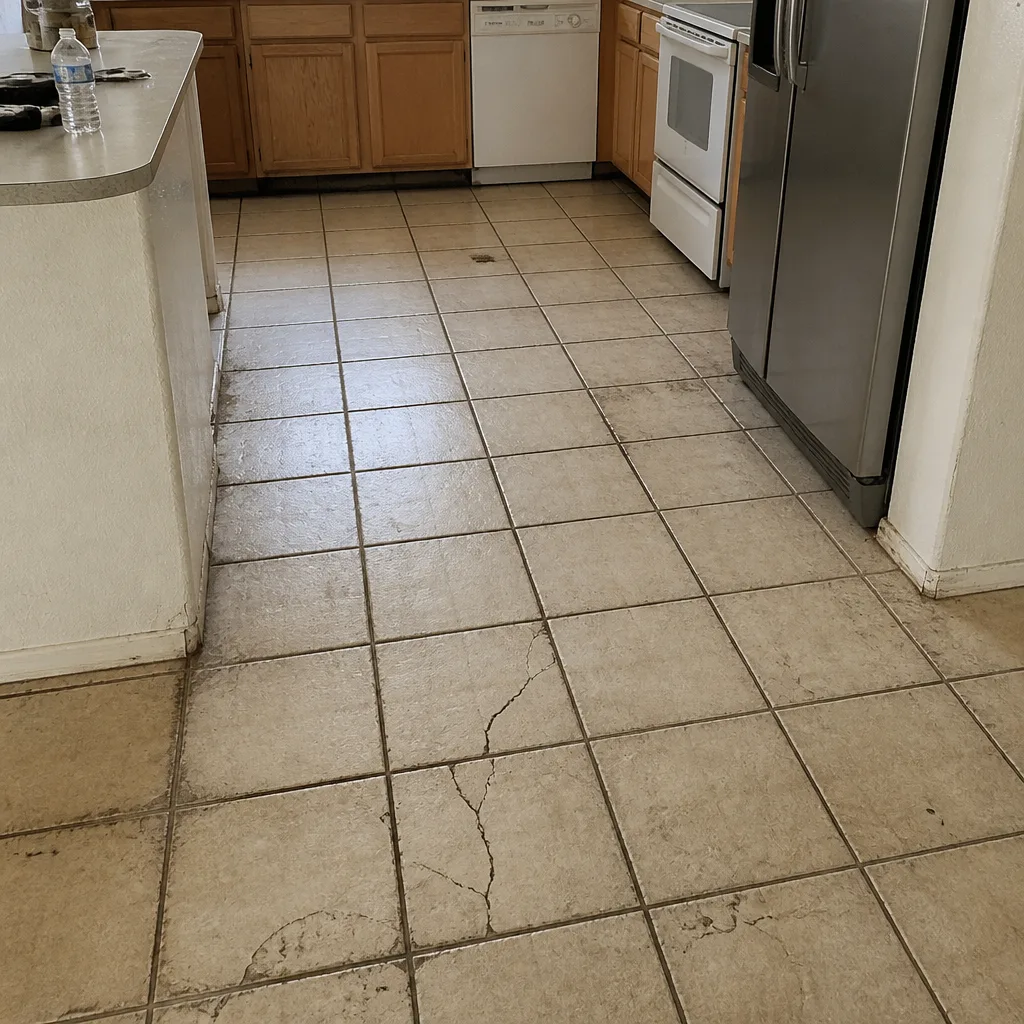
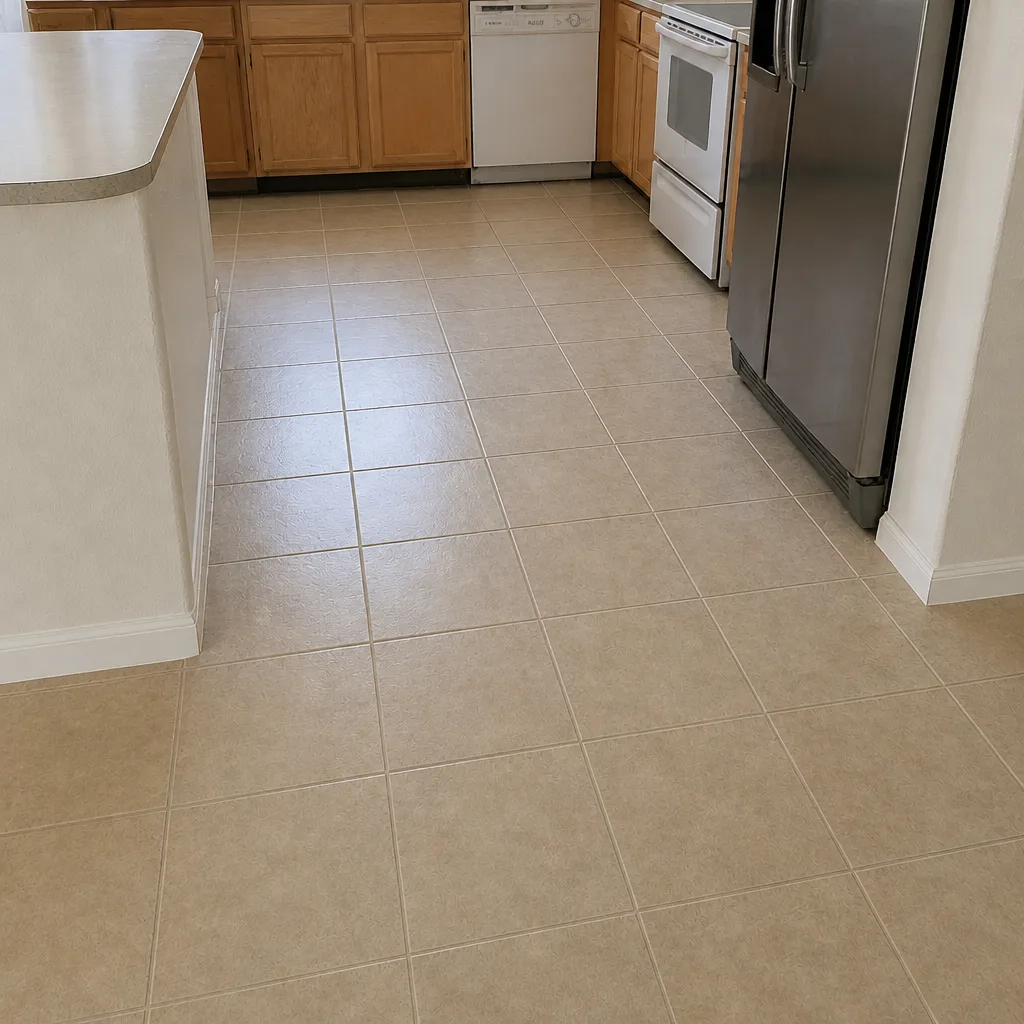
See the difference
 Before
 After
 Before
 After
 Before
 After
When to Call a Professional
Some jobs are DIY-friendly – a small carpet patch, a single loose tile. Most of the scope on this page isn’t. Call a professional when the project involves slab prep or grading, when you’re laying tile over a large area and grout line consistency matters, when stairs are involved, or when you suspect existing hardwood might be refinishable. Concrete grinding, self-leveling compound, and anything dealing with a subfloor that may hide moisture or damage can go wrong quickly, and a mistake there means tearing the new floor back out. The same goes for stair work, where a mis-fitted nosing is a genuine safety issue. If you’re unsure whether a floor can be refinished, that’s a question for the estimate visit, not a video tutorial. Flooring Installation Summerlin offers free estimates in Summerlin – call (844) 320-7082.
Frequently Asked Questions
Flooring installation in Summerlin typically runs $4 to $9 per square foot installed in 2026, with carpet at the lower end and tile and LVP in the middle; hardwood refinishing is priced separately at roughly $3.50 to $6 per square foot. These are estimated ranges, and every project’s written quote sets the final price once the subfloor and scope are checked. Call (844) 320-7082 for an exact quote – estimates are free.
Because the store price is material only, and installation adds demo, disposal, underlayment, subfloor prep, labor, transitions, and trim. On a typical Summerlin slab with moderate variance, prep alone can add $0.50 to $1.50 per square foot. Once every line is itemized, the installed number makes sense. Call (844) 320-7082 to walk through a line-item ballpark for your rooms.
Yes. The estimate is free, and the written quote sets the price per job. There’s no charge to walk through your project or compare brands on paper. Call (844) 320-7082 to schedule your free estimate.
The length depends on scope, square footage, and prep work discovered once demo starts, so we set the schedule at the estimate rather than guessing over the phone. Larger rooms and stairs take longer than a simple bedroom swap. Call (844) 320-7082 and we’ll give you a realistic timeline for your project.
Yes. We carry Shaw, Mohawk, COREtec, Pergo, LifeProof, Mannington, Armstrong, Daltile, and Karndean, which covers carpet, tile, LVP, laminate, and hardwood categories, so you can line up true alternatives in one conversation. That’s how the per-year math gets honest. Call (844) 320-7082 to set a comparison appointment.
Refinishing is usually the smarter cost move if the wood is thick enough and in good condition, and it typically runs $3.50 to $6 per square foot against $8 to $14 per square foot for full replacement. Whether a specific floor can take another sanding depends on its thickness and condition, checked at the estimate visit. Call (844) 320-7082 to schedule a free assessment.
The Bottom Line
The number on the box is not the number you pay, and the gap between bids is almost always in the prep, disposal, and trim rather than the flooring itself. Get every line item in writing, compare on scope and not totals, and run your floors on cost per year with a long-life warranty in the picture. In Summerlin, slab prep and stairs are where truthful estimates separate from optimistic ones. If the wood floors are already there and thick enough, refinishing likely costs less than replacement. When you’re ready to turn all of this into a real number for your own home, call (844) 320-7082 for a free estimate. We answer 24/7. Fast dispatch from 7am to 7pm, Sunday through Friday.
Written by the team at Flooring Installation Summerlin.