
Last updated November 18, 2026
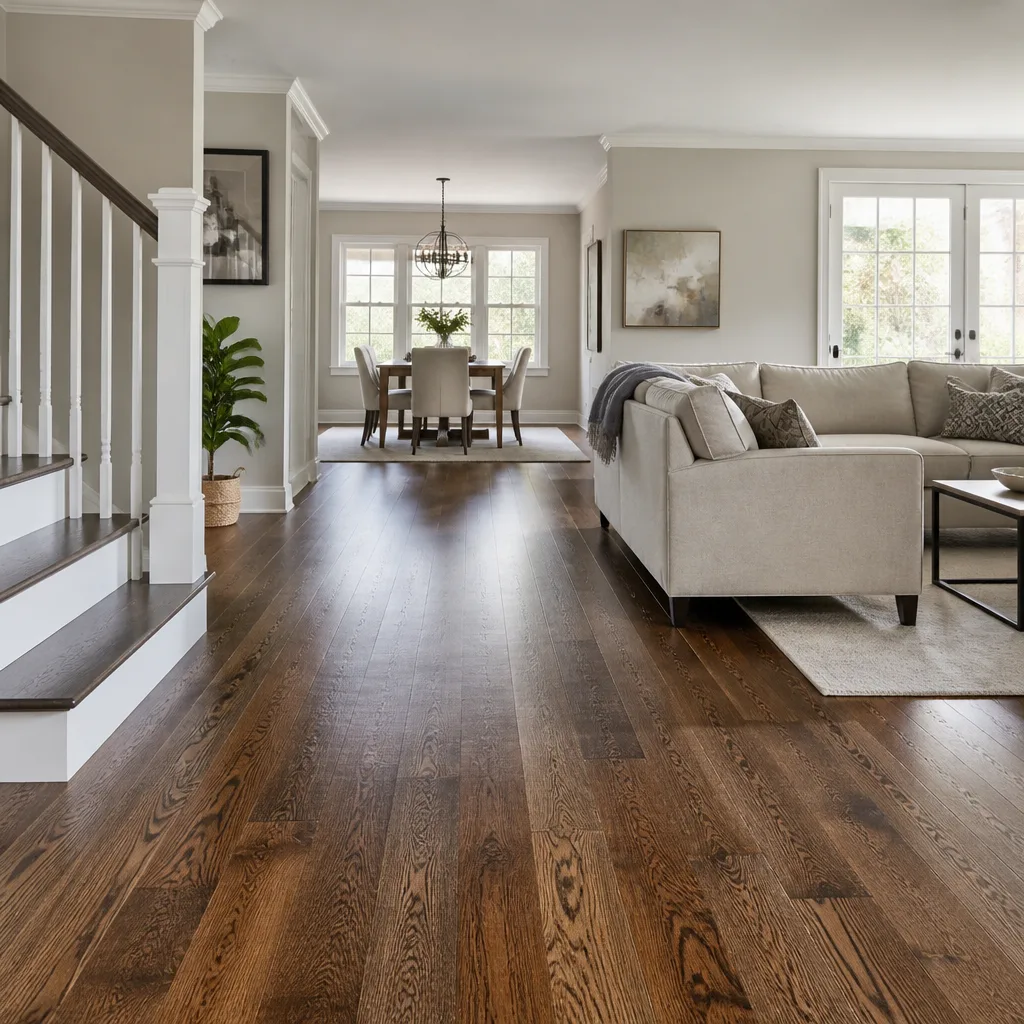 Hardwood
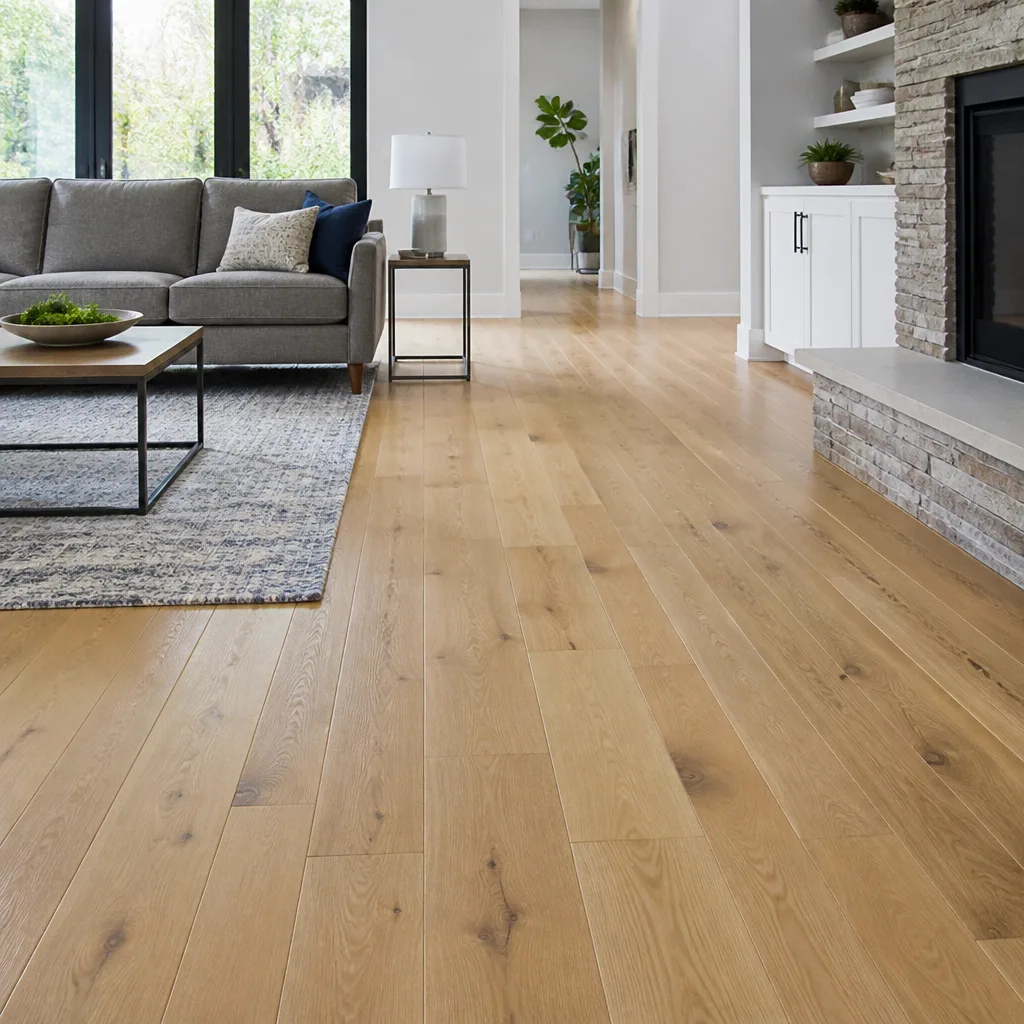 Engineered hardwood
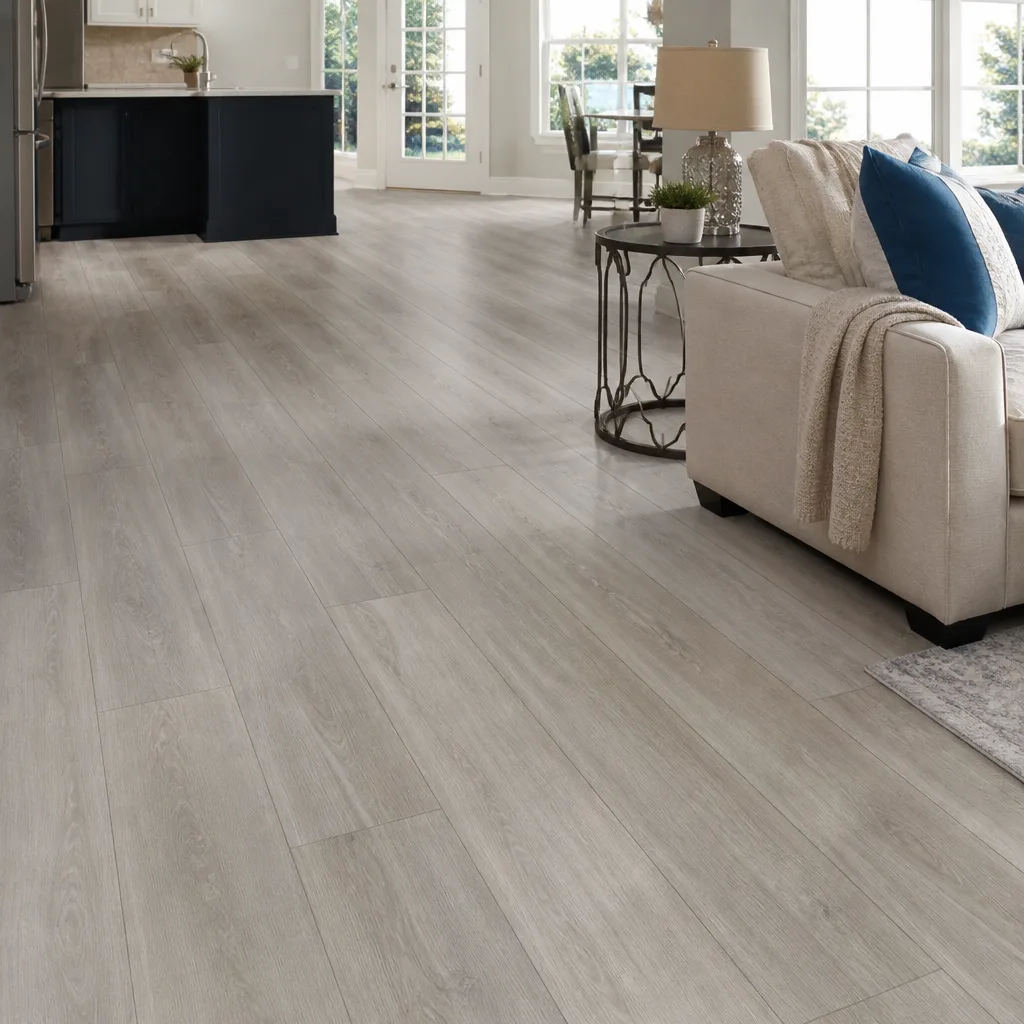 Luxury vinyl plank
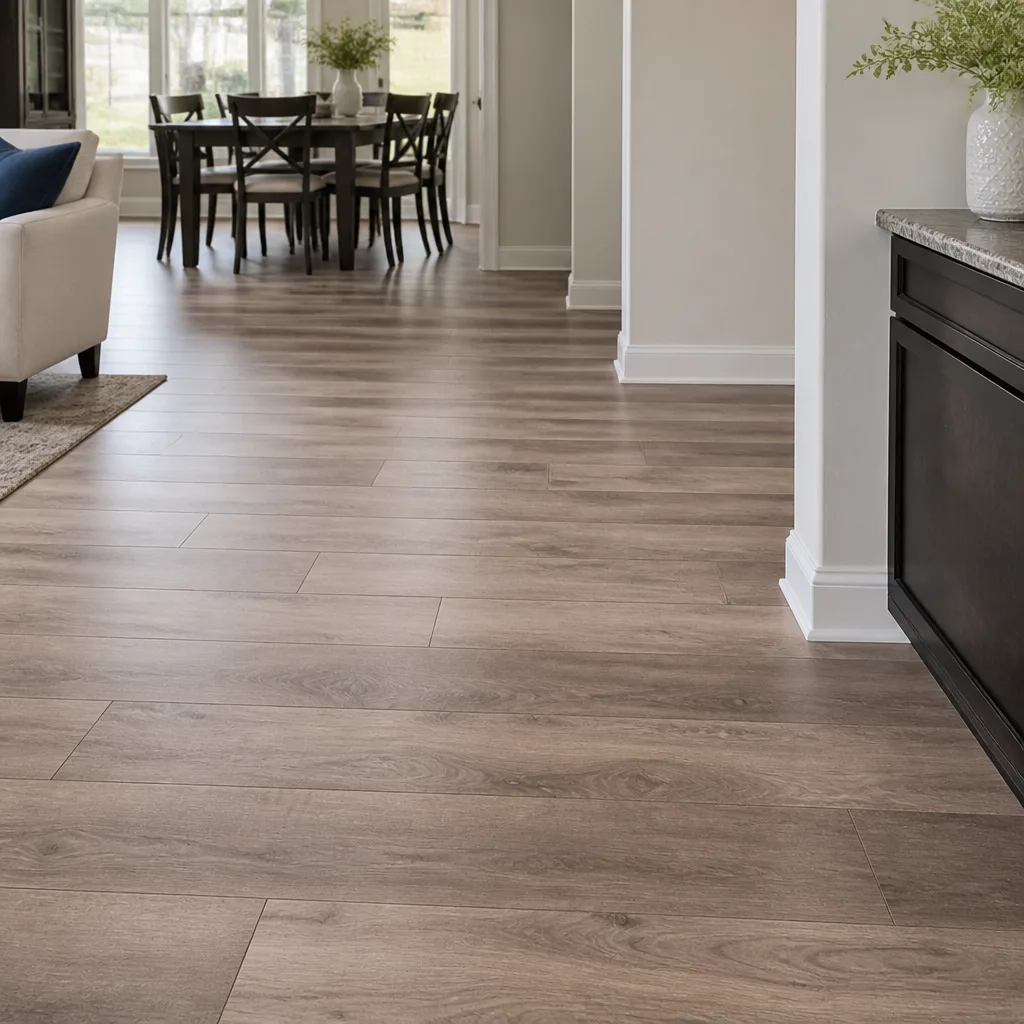 Laminate
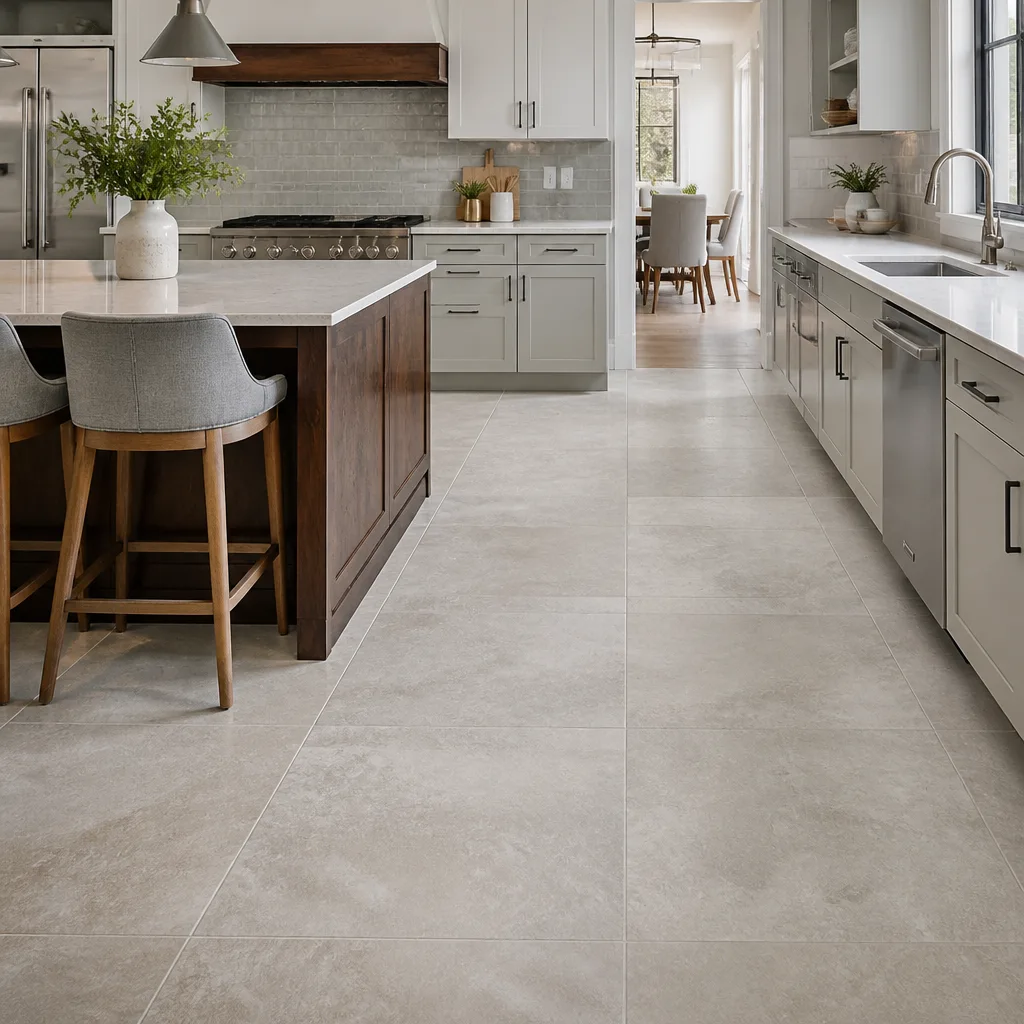 Porcelain tile
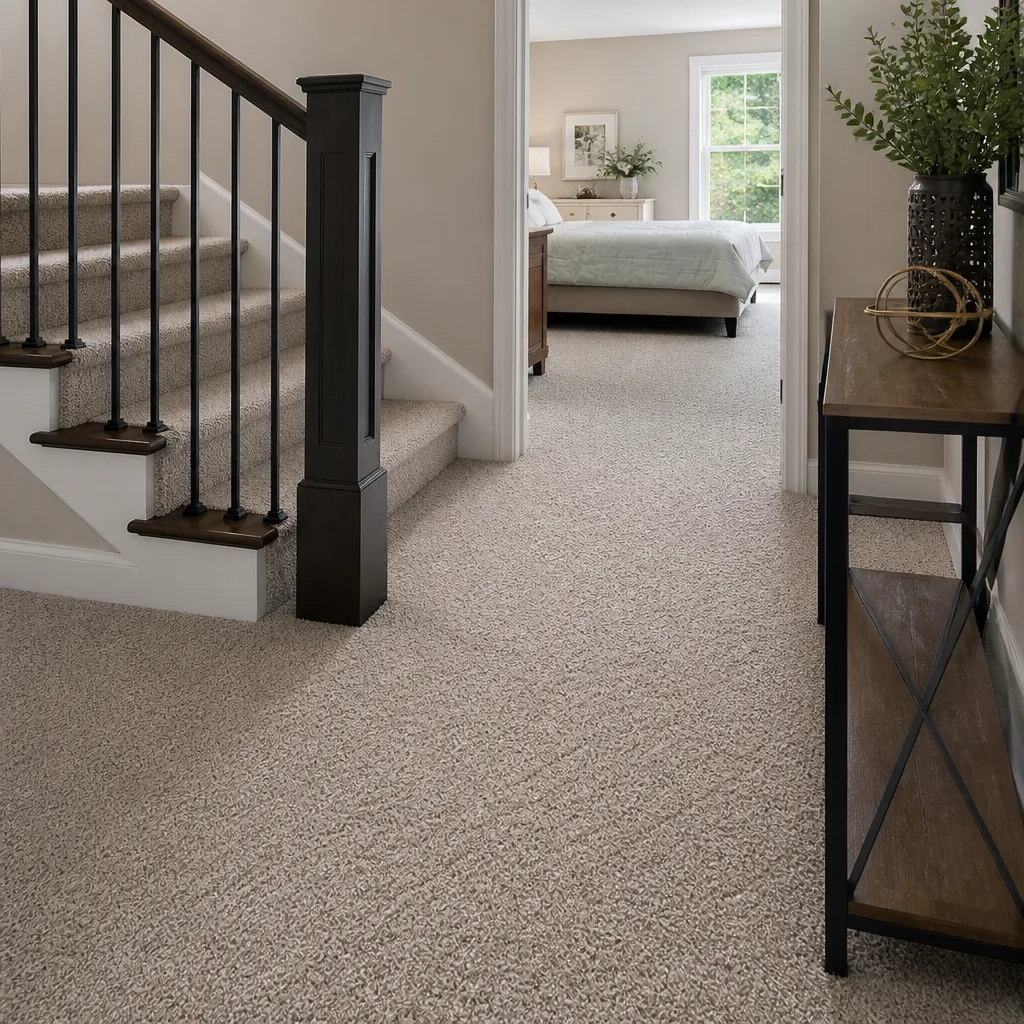 Carpet
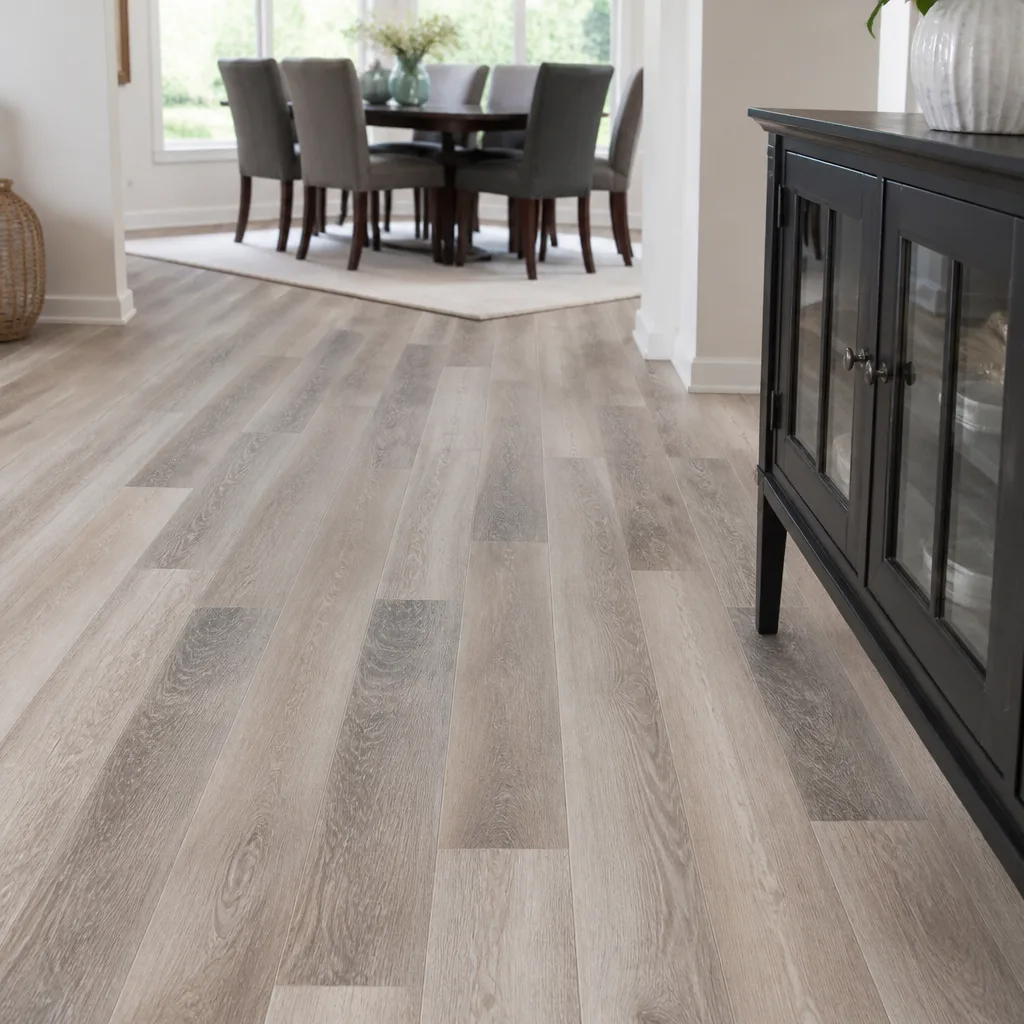 Shaw
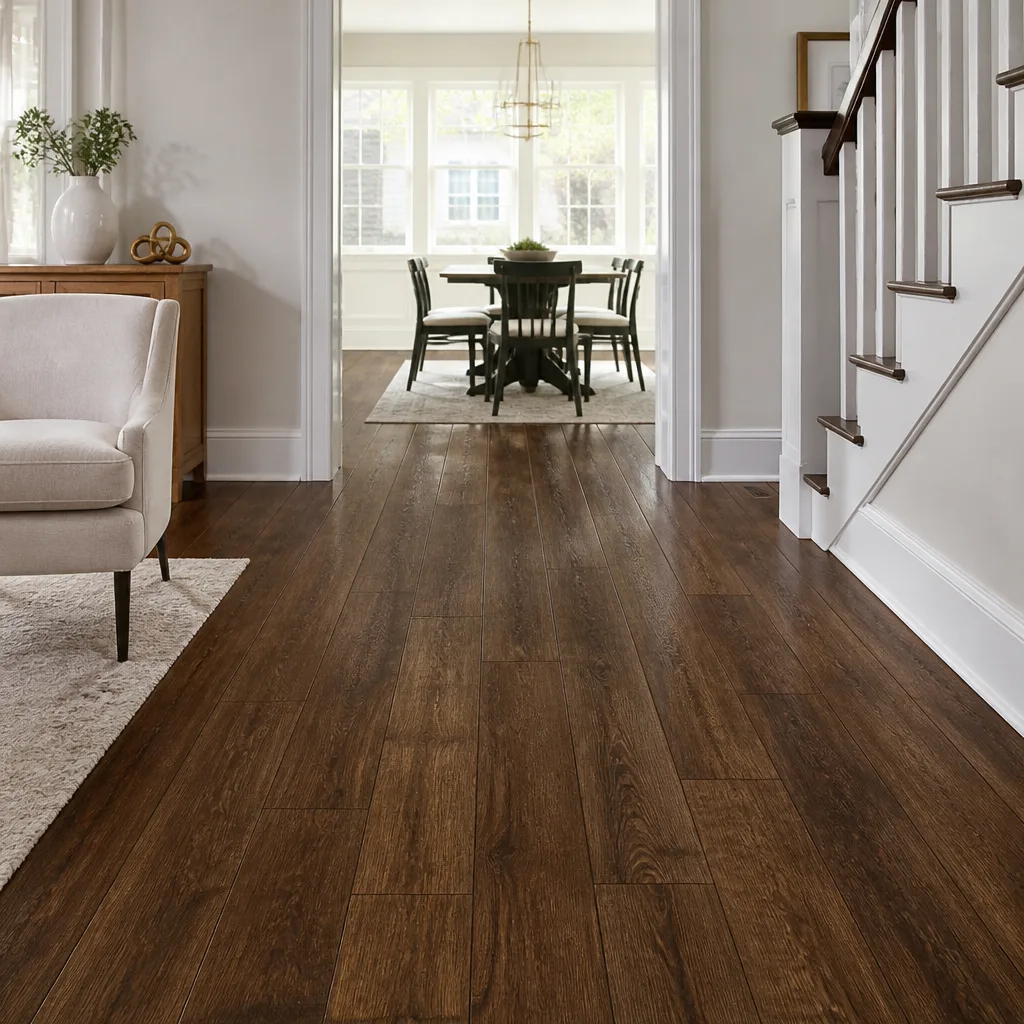 Mohawk
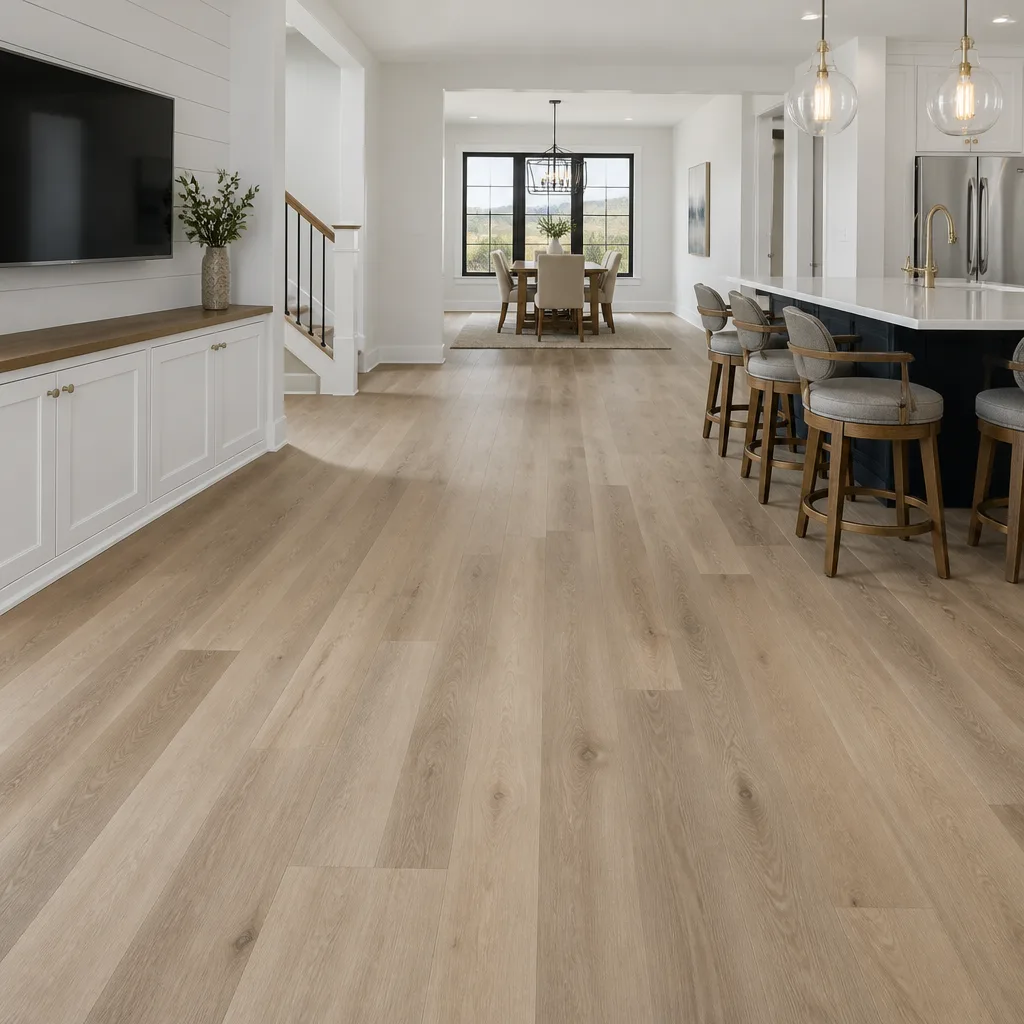 COREtec
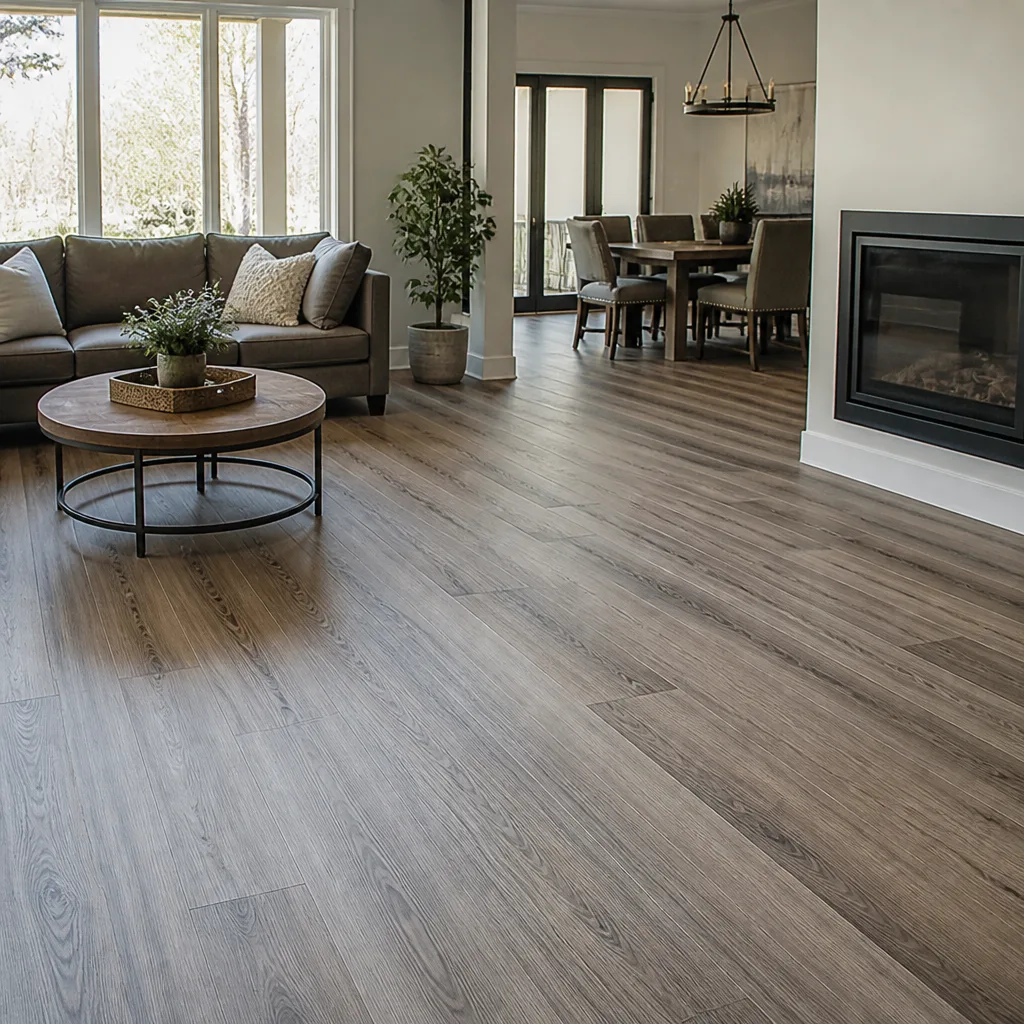 Pergo
Free in-home measure and written estimate: Shaw, Mohawk, COREtec and Pergo lines compared on your own rooms, with carpet, tile, vinyl plank, laminate and hardwood laid out side by side
Get your free estimateHow Summerlin’s Climate Can Affect Your Flooring Choice
Most homeowners in Summerlin assume our dry desert air is the friendliest possible climate for wood and tile. It’s the opposite. Las Vegas averages under 5 inches of rain a year, and that lack of moisture is exactly what cracks, cups, and separates floors installed without accounting for it. The real stress comes from movement: boards swell on a humid monsoon afternoon and shrink again once the air conditioner runs, and in spring and fall the daily temperature swing can reach 50°F. Summerlin sits above 3,000 feet, which sharpens those swings further than the valley floor. In this guide we’ll walk through how Summerlin’s climate tests each flooring category, the moisture readings that should clear a slab before anything goes down, and how to choose a floor that stays put for years.
Quick Answer
The best flooring for the Las Vegas climate is usually a dimensionally stable product: luxury vinyl plank, engineered hardwood, or porcelain tile, installed over a slab that has been moisture-tested and brought into the range the manufacturer specifies. Solid hardwood can work in Summerlin, but our seasonal humidity swings and HVAC-driven indoor air make it the riskiest choice unless it’s acclimated and installed with real care. The material matters, but the prep and installation matter just as much.
Styles & brands we work with
- Hardwood
- Engineered hardwood
- Luxury vinyl plank
- Laminate
- Porcelain tile
- Carpet
- Shaw
- Mohawk
- COREtec
- Pergo
Table of Contents
- Why Summerlin’s Elevation Changes the Rules
- What Low Humidity Does to Wood Floors
- The Indoor Climate Your AC Creates
- Which Flooring Categories Handle This Climate Best
- Acclimation: What It Means in a Desert Home
- Why We Moisture-Test the Slab Even Here
- Refinishing Existing Hardwood Instead of Replacing It
Why Summerlin’s Elevation Changes the Rules
Summerlin sits at roughly 3,000 feet and up, and that elevation matters more than most people expect. Higher ground runs a little cooler at night and warms faster during the day, so the gap between the coolest and warmest hours is wider here than down on the Strip or in the older parts of the valley. For a floor, that gap is everything. Wood, laminate, and even some rigid-core products expand and contract with temperature and humidity, and a wider daily swing means more movement over the course of a year.
What that means in practice:
- A floor installed in March, when nights are still cool, will see very different conditions by July, when the house is closed up and the air conditioning is running hard.
- Acclimation windows that work on the valley floor may be too short for a Summerlin home with big west-facing glass and strong afternoon sun.
- Homes on the higher edges of the community, where the evening cool-down is more pronounced, tend to see more seasonal movement in solid wood than homes tucked into sheltered streets.
None of this rules out wood. It means the installation has to be planned around the house and the season, not pulled off a generic checklist. When we quote a job in Summerlin, the acclimation plan is part of the conversation, not an afterthought. If you’re weighing material options, our flooring installation Summerlin page lays out the categories we work with.
What Low Humidity Does to Wood Floors
Wood is a hygroscopic material. It takes on moisture from the air and gives it back, and it changes dimension as it does. In a humid climate, the concern is swelling. Here, the concern runs the other way: prolonged dry air pulls moisture out of the boards, and they shrink. That’s what produces the gaps between planks that show up every winter, the cupping you see when a board dries unevenly, and the squeaks that develop when the framing and the flooring stop moving together.
Installers talk about moisture content, usually written as MC, and the target is to match the wood to the conditions it will live in. In Summerlin, the air is dry enough that solid hardwood often settles at a lower moisture content than it would in most of the country. If boards are installed while they’re still carrying more moisture than the house will hold, they’ll shrink after installation and open up at the seams. That’s the mechanism behind most of the gapping complaints we hear about.
The other half of the story is the monsoon season. Late summer brings short bursts of humid air, and a floor that has dried out all spring will take on moisture quickly. Solid wood moves the most in that cycle. Engineered hardwood is built in cross-ply layers that resist that movement, and luxury vinyl plank barely moves at all. That’s the core reason engineered products and LVP have become the default recommendation for most Summerlin homes. They aren’t better looking than solid oak. They’re just less likely to fight the climate.
The Indoor Climate Your AC Creates
Here’s the part most flooring guides skip. The climate inside a Summerlin house is not the climate outside it. Homes here run air conditioning for roughly eight months of the year, and a closed-up house with the AC running holds a very different humidity level than the desert air on the patio. That indoor condition is what your floor actually lives in, and it’s what the flooring needs to be acclimated to.
The result is a gap between outdoor and indoor conditions that can be surprisingly wide. A floor delivered to a Summerlin home in July may sit in dry outdoor air during delivery and then spend its life in a house held at a steady, slightly different humidity. If it’s installed before it adjusts, the movement happens after the installation instead of before it. That’s when you get gaps, lifted edges, and callbacks.
Practical steps we take on a Summerlin job:
- Bring the flooring into the home and let it sit in the rooms where it will be installed, with the HVAC running as it normally would.
- Check moisture content with a meter rather than guessing from the calendar.
- Confirm the reading falls within the range the manufacturer specifies for that product.
- Only then schedule the installation, and keep the home’s temperature steady in the days around it.
Acclimation isn’t a delay for its own sake. It’s the step that decides whether the floor you bought performs the way the product was designed to.
Which Flooring Categories Handle This Climate Best
Dimensional stability is the technical term, and it’s the single most useful thing to understand when you’re choosing a floor for Summerlin. A stable floor doesn’t move much when temperature and humidity change. Here’s how the main categories stack up.
- Luxury vinyl plank – The most dimensionally stable option for most rooms. Rigid-core products like COREtec and LifeProof are built to resist movement, which is why they’re a common choice in Summerlin homes with big temperature swings. They’re water-resistant, not waterproof: standing water and moisture from below still have to be dealt with.
- Engineered hardwood – Real wood on top, cross-ply construction underneath. The layered build resists the movement that solid wood shows, so it handles Summerlin’s dry air and seasonal swings with far fewer gaps. Shaw and Mohawk both make engineered lines worth comparing.
- Porcelain and ceramic tile – Essentially unaffected by humidity, which makes tile the most predictable floor in this climate. The weak point isn’t the tile, it’s the installation: proper substrate prep and the right setting materials are what keep grout lines straight and tiles bonded. Daltile is our go-to for tile selection.
- Carpet – Stable and comfortable, and a good fit for bedrooms where temperature swings are less of a concern. The material itself isn’t the issue; the pad and the installation are.
- Solid hardwood – Beautiful and worth it in the right home, but the most climate-sensitive choice here. It can work, and it works best when it’s acclimated carefully and the home’s indoor humidity is managed.
If you’re replacing carpet in a bedroom or a hall, our carpet installation service covers the soft-surface side, and tile flooring installation handles the wet areas and high-traffic rooms where tile makes the most sense. The point of comparing across categories is to fit the material to how each room actually lives, not to push one product everywhere.
Acclimation: What It Means in a Desert Home
Acclimation is the process of letting flooring adjust to the temperature and humidity of the home before it’s installed. In a desert climate it’s easy to assume there’s nothing to adjust to, but that’s a costly assumption. The material arrives from a warehouse or a truck that may have held very different conditions, and it needs time to settle into the indoor climate it will live in.
What that looks like depends on the product and the home. The specifics come from the manufacturer’s instructions, and they get written into your estimate so there are no surprises on install day. What we can tell you is that the process can’t be rushed by cranking the heat or running a dehumidifier in the room. The wood has to reach its own equilibrium, and the moisture meter tells us when it has.
For Summerlin homeowners, the practical takeaway is simple: build acclimation time into the schedule. A floor that’s installed a few days later but performs for years is a better outcome than one that goes down fast and gaps by the next dry season. This is also why we don’t promise same-day installation. The measure, the estimate, the acclimation, and the scheduled install day each do a job.
Why We Moisture-Test the Slab Even Here
Dry climate doesn’t mean dry slab. Concrete holds moisture, and a slab can release vapor for a long time after the pour, no matter how arid the air above it is. Moisture moving up through concrete is one of the most common causes of flooring failure, and it doesn’t announce itself. The floor looks fine for a season and then starts to cup, buckle, or lift at the edges.
That’s why moisture testing happens before any installation over a slab, including in Summerlin. The test gives us a reading, and the reading has to clear the threshold the manufacturer and the product instructions set before the floor goes down. Those limits vary by product and by the home, so there’s no single number that applies to every job. What matters is that the test happens and the result is documented in the estimate.
If the slab reads high, the fix isn’t to install anyway and hope. It’s to address the moisture first, whether that means a vapor barrier, a moisture-mitigation product, or a different flooring spec that tolerates the conditions. If you choose tile, the same logic applies to the substrate; a flat, dry, stable surface is what keeps the installation sound. What we do is install and service the floor you choose, so the prep is part of the craft, not a line item to skip.
Refinishing Existing Hardwood Instead of Replacing It
Not every flooring problem in Summerlin calls for a new floor. If a home already has solid hardwood that’s dull, scratched, or uneven in color, refinishing can bring it back without tearing it out. Sanding, staining, and finishing is labor-intensive work, and it’s a skill many carpet-and-tile shops outsource or skip entirely. We offer it because keeping original wood floors alive is often the smarter call than covering them over.
Whether a particular floor can be refinished depends on the thickness of the wood and its condition, and that’s something we check at the estimate visit. A stain match isn’t guaranteed either; the existing wood and its history decide what’s realistic. What we can do is give you an honest read on whether refinishing is a good fit before you commit to replacing a floor that might have years of life left in it.
Common Mistakes to Avoid
- Choosing solid hardwood for a Summerlin home without planning for the seasonal movement. It can work, but only when acclimation and indoor humidity are handled deliberately. Skip those steps and you’ll be looking at gaps within the first dry season.
- Skipping the slab moisture test because “it never rains here.” Concrete holds moisture regardless of the weather, and a high reading is one of the leading causes of floor failure. The test is quick and the result belongs in your estimate.
- Installing a floor without letting it acclimate to the home’s air conditioned climate. A floor that adjusts after installation moves in the wrong direction.
- Treating LVP or laminate as waterproof. These products are water-resistant, which is different. Standing water and moisture from below still have to be dealt with.
- Picking a material without considering the room. The best floor for a Summerlin bathroom or laundry is rarely the best floor for a bedroom, and a single product across the whole house usually means a compromise somewhere.
- Assuming a big-box purchase includes the installation craft. The product is only half the job. Straight grout lines, tight seams, and a properly prepared substrate are what make a good floor last.
- Scheduling the install before the estimate and acclimation are sorted. A rushed timeline in this climate is the most reliable way to end up with a floor that doesn’t perform.
See the difference
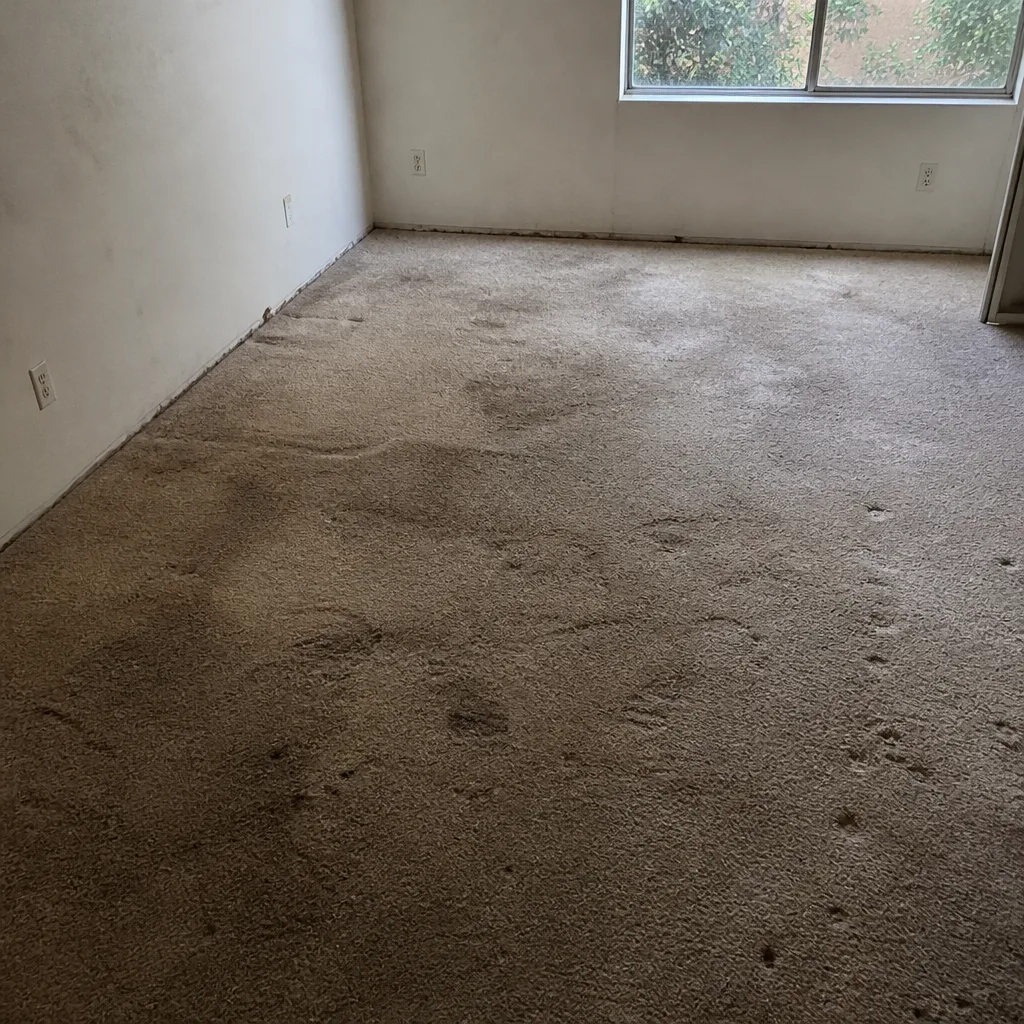 Before
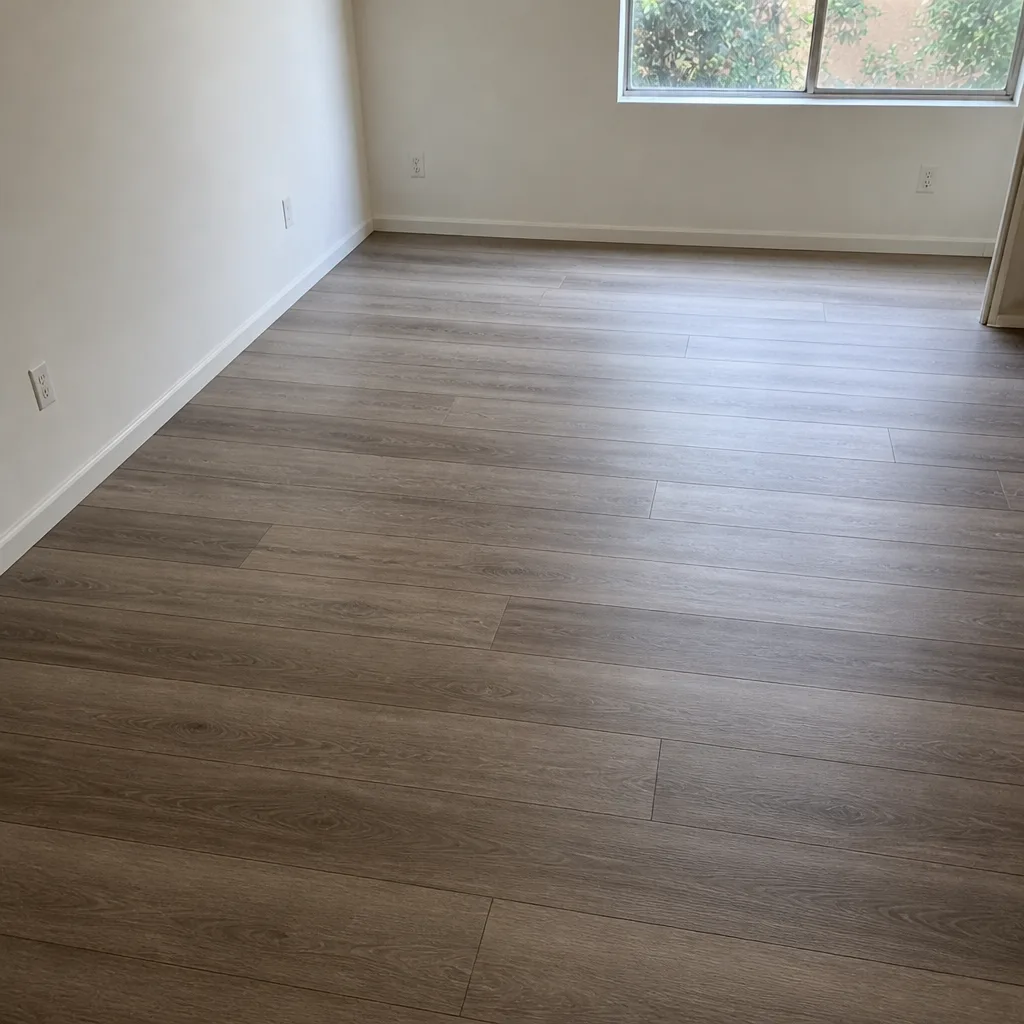 After
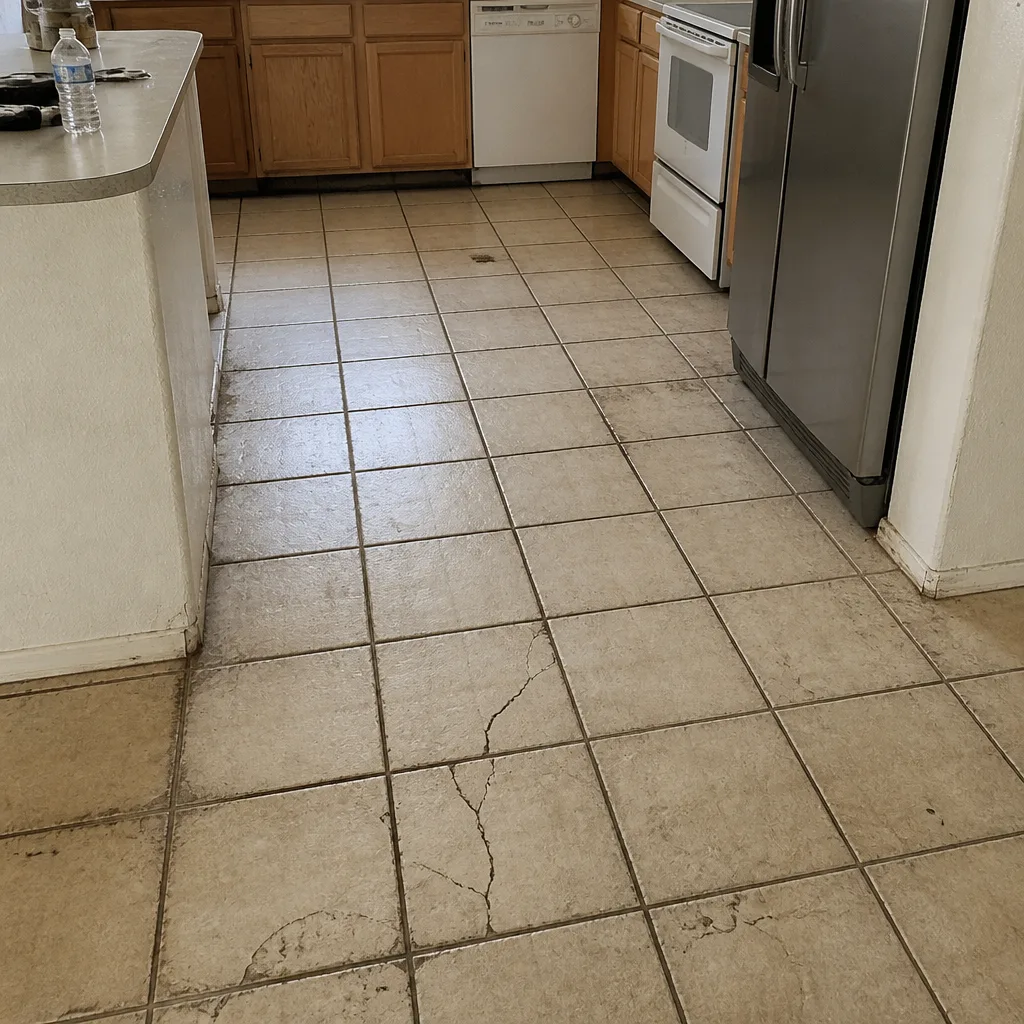 Before
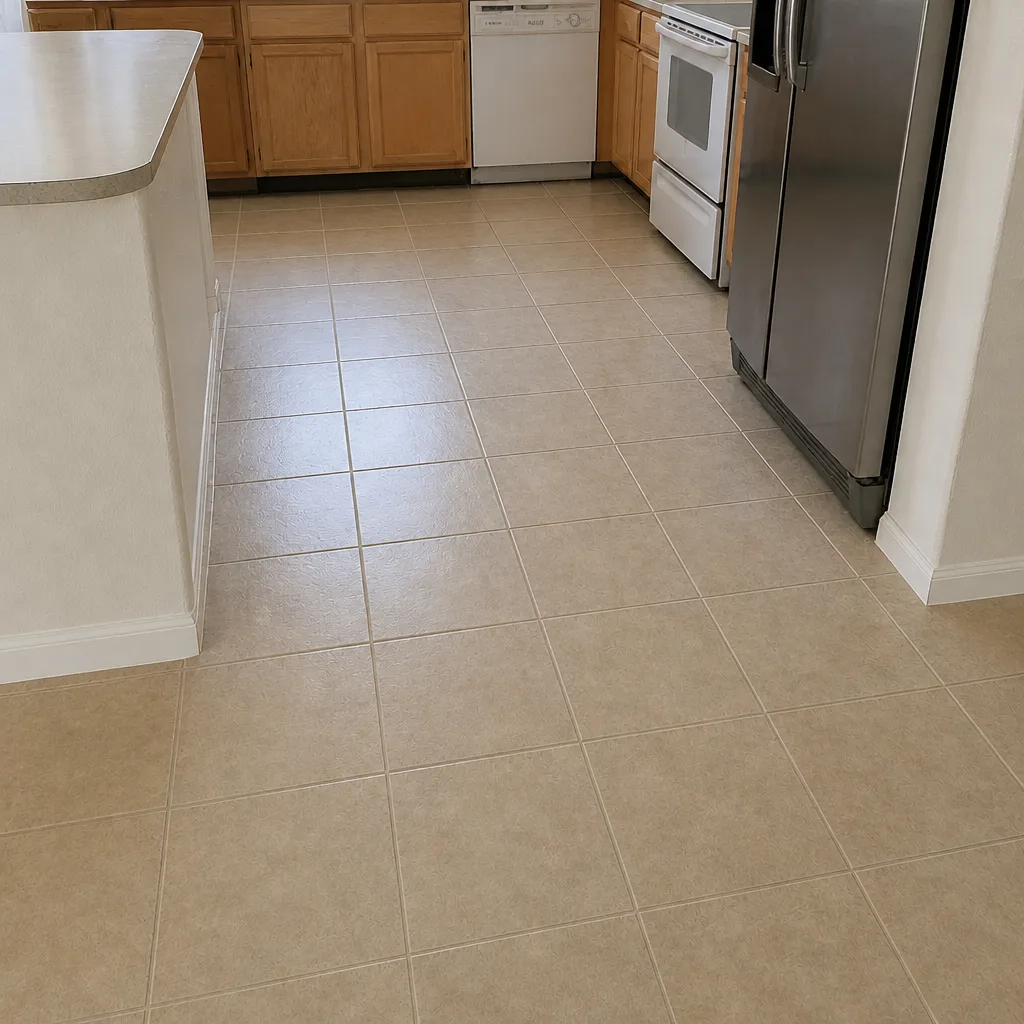 After
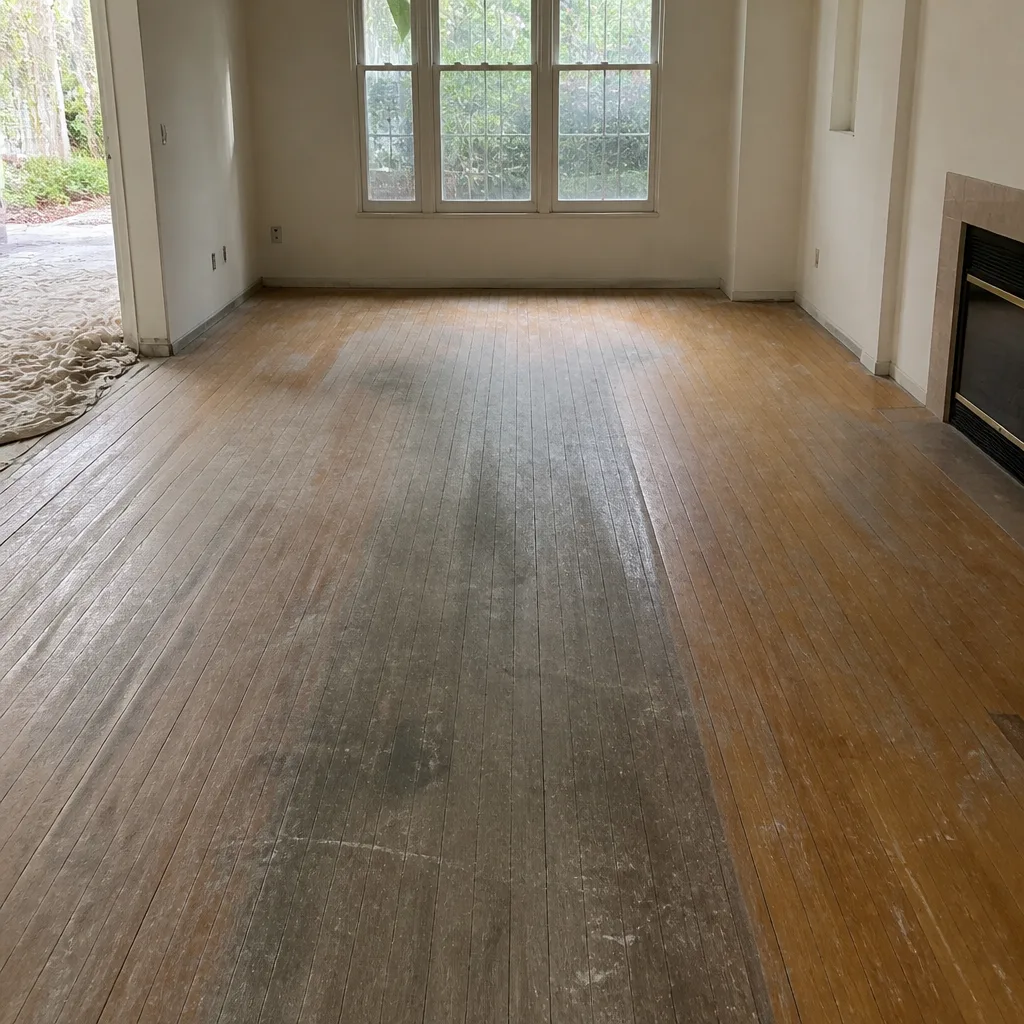 Before
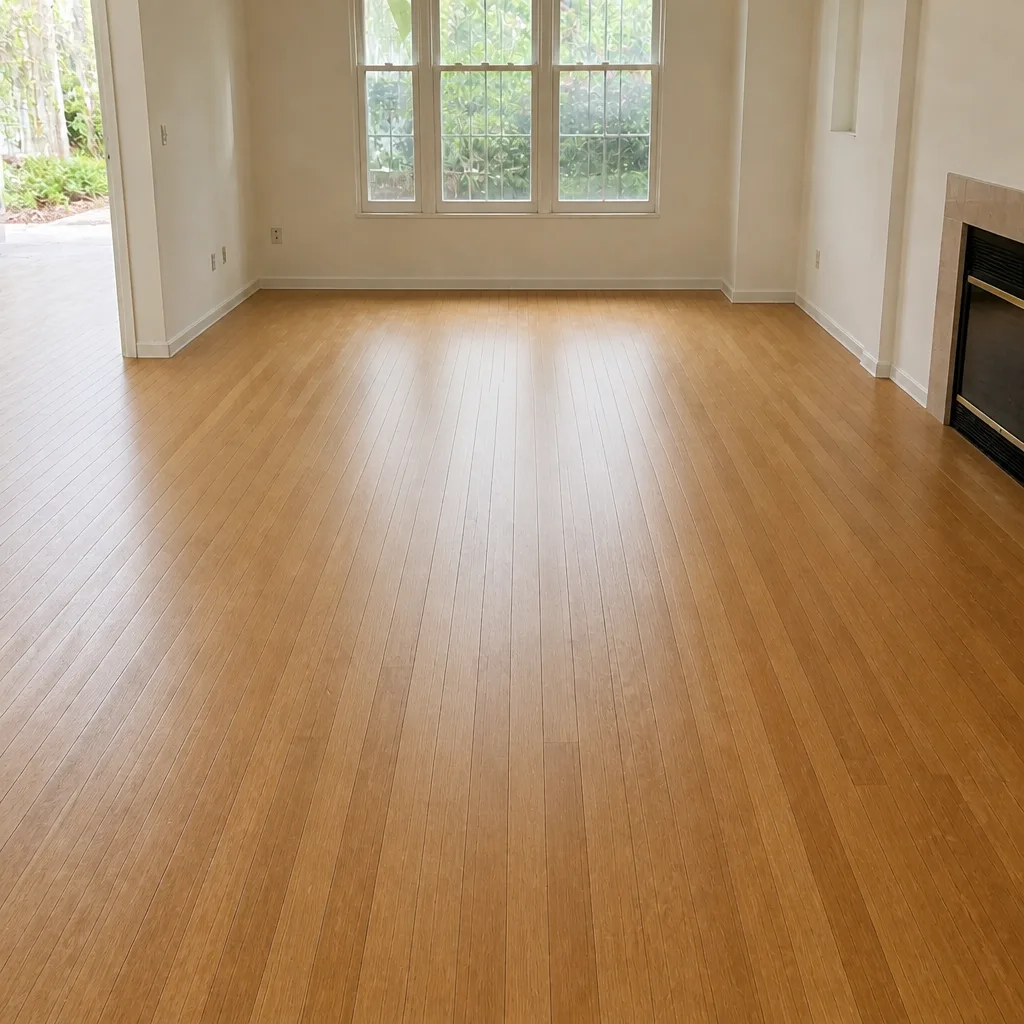 After
When to Call a Professional
Some flooring decisions are straightforward: a bedroom carpet replacement, a small tile repair. Others need a technician on site before you spend a dollar. Call us if your hardwood is gapping, cupping, or squeaking; if a floor has lifted at the seams after a humid stretch; if you’re not sure whether your slab is dry enough for the product you want; or if you’re trying to decide between refinishing an existing wood floor and replacing it. These are all judgment calls that depend on readings and inspections, not guesses. Flooring Installation Summerlin offers free estimates in Summerlin, and a written quote that spells out the prep, the product, and the schedule. Call (844) 320-7082 to schedule yours.
Frequently Asked Questions
Luxury vinyl plank, engineered hardwood, and porcelain tile are the most dimensionally stable choices for Las Vegas area homes, because they move the least when temperature and humidity shift. Solid hardwood can work but needs careful acclimation. The installation prep matters as much as the material, so a free estimate is the fastest way to get a straight answer. Call (844) 320-7082 for an exact quote; estimates are free.
It can. Summerlin sits above 3,000 feet, and that higher ground brings a wider daily temperature swing than the valley floor, which means more seasonal movement for wood and other climate-sensitive products. That’s why acclimation windows are planned around the specific home and season. Call (844) 320-7082 and we’ll walk through what your house needs.
Yes. Acclimation lets the flooring adjust to the air conditioned indoor climate it will actually live in, not the outdoor desert air. A floor installed before it settles tends to gap or lift afterward. The specifics come from the product instructions and get written into your estimate. Call (844) 320-7082 to schedule a free measure.
Yes, moisture testing happens before any installation over a slab, and the reading has to clear the threshold the manufacturer specifies. Dry air above a slab doesn’t mean the concrete is dry underneath. The result gets documented in the written estimate. Call (844) 320-7082 for a free estimate.
It can, when it’s acclimated carefully and the home’s indoor humidity is managed. Solid wood is the most climate-sensitive option here, so it’s a judgment call for each house rather than a yes or no. We’ll check the conditions at the estimate visit. Call (844) 320-7082 to schedule yours; estimates are free.
Have it inspected before doing anything else, since gapping and lifting can come from humidity, slab moisture, or an installation issue, and the fix depends on the cause. Refinishing is sometimes an option for solid wood, depending on the thickness and condition of the boards. Call (844) 320-7082 and we’ll take a look. We answer 24/7. Fast dispatch from 7am to 7pm, Sunday through Friday.
The Bottom Line
Summerlin’s climate rewards homeowners who plan for movement instead of ignoring it. Low humidity and a wide daily temperature swing make solid hardwood the riskiest choice, while LVP, engineered hardwood, and tile hold their shape with far less drama. The installation is where those advantages are won or lost: acclimation in the home’s actual indoor climate, a moisture test on the slab, and a substrate prepared properly. Materials from Shaw, Mohawk, and COREtec are all worth comparing in one conversation, and refinishing an existing wood floor is often smarter than replacing it. Get a free, written estimate before you commit, and the floor you choose will fit the home you have.
Call (844) 320-7082 to schedule your free estimate. We answer 24/7. Fast dispatch from 7am to 7pm, Sunday through Friday. Our technicians have up to 9 years of experience, and we serve Summerlin and nearby communities including Sandy Valley.
Written by the team at Flooring Installation Summerlin.