
Last updated November 18, 2026
 Hardwood
 Engineered hardwood
 Luxury vinyl plank
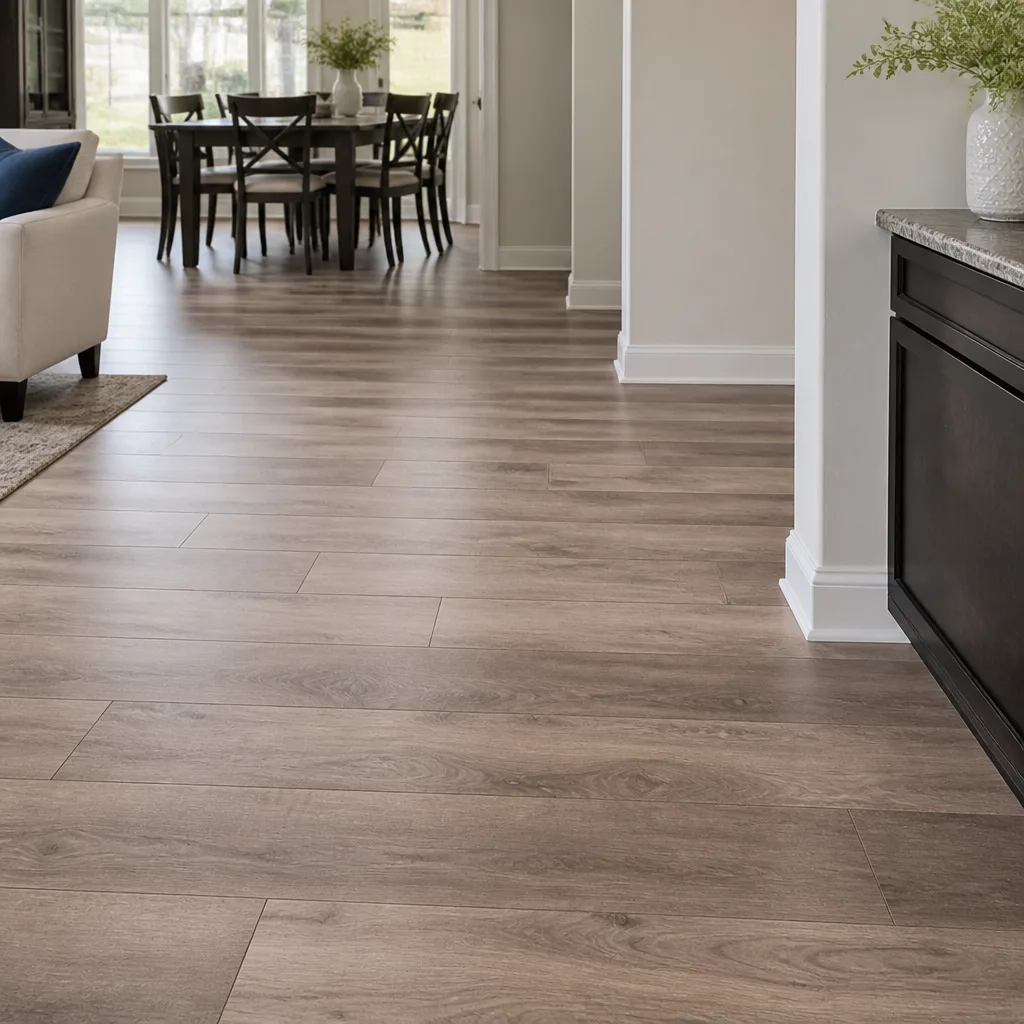 Laminate
 Porcelain tile
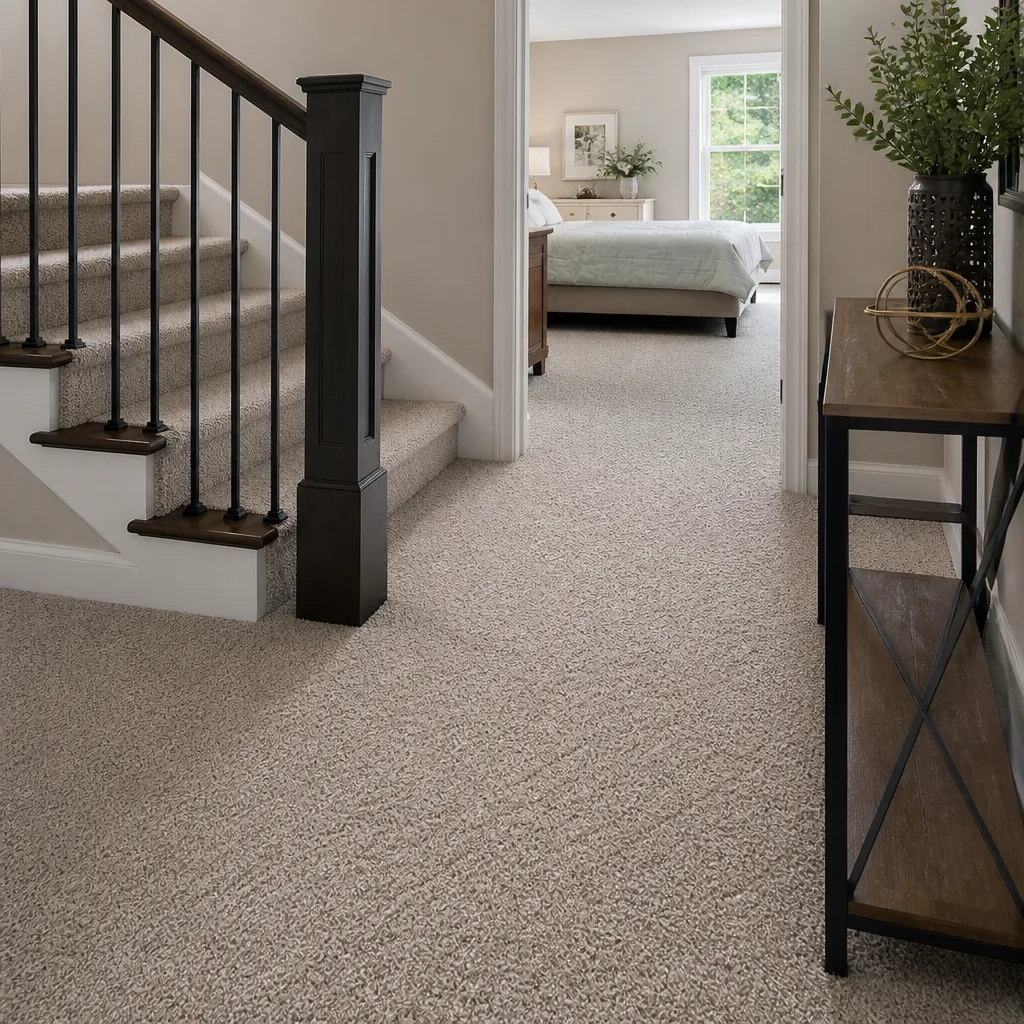 Carpet
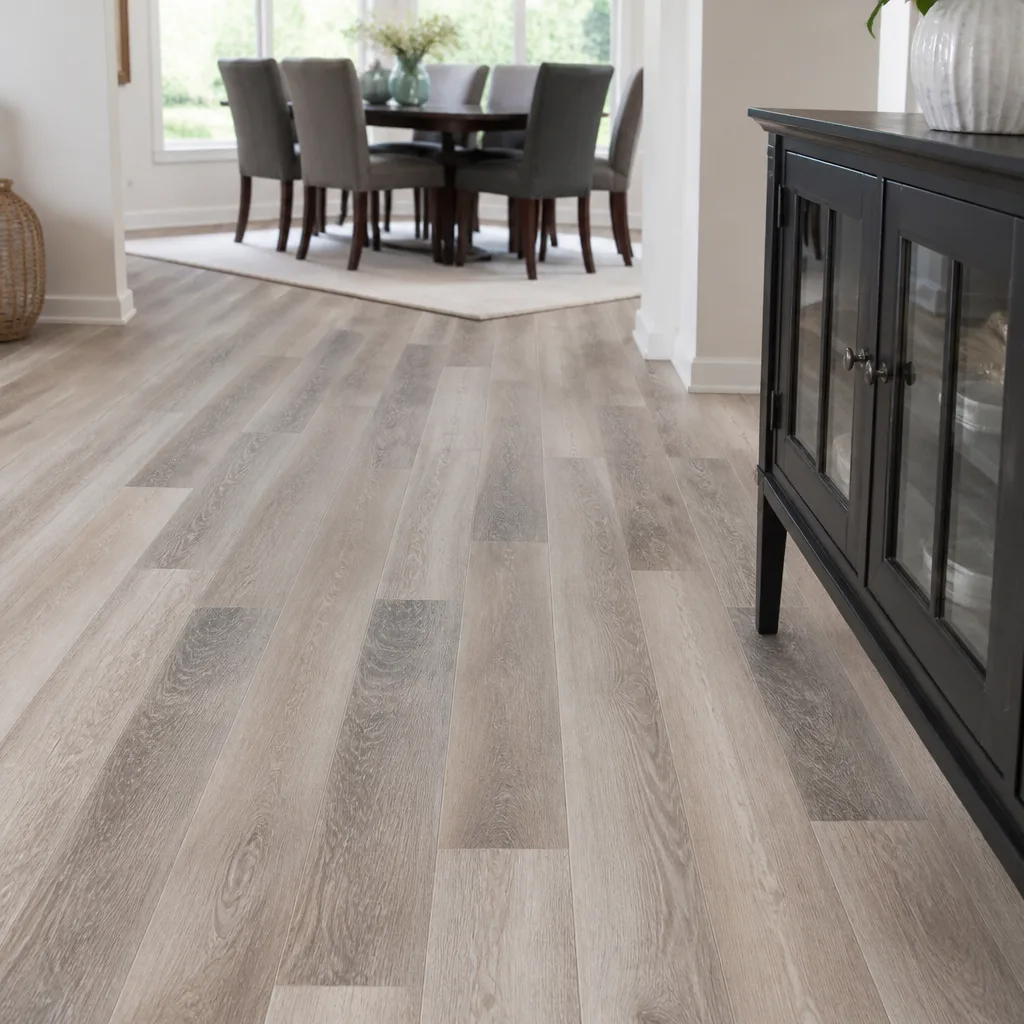 Shaw
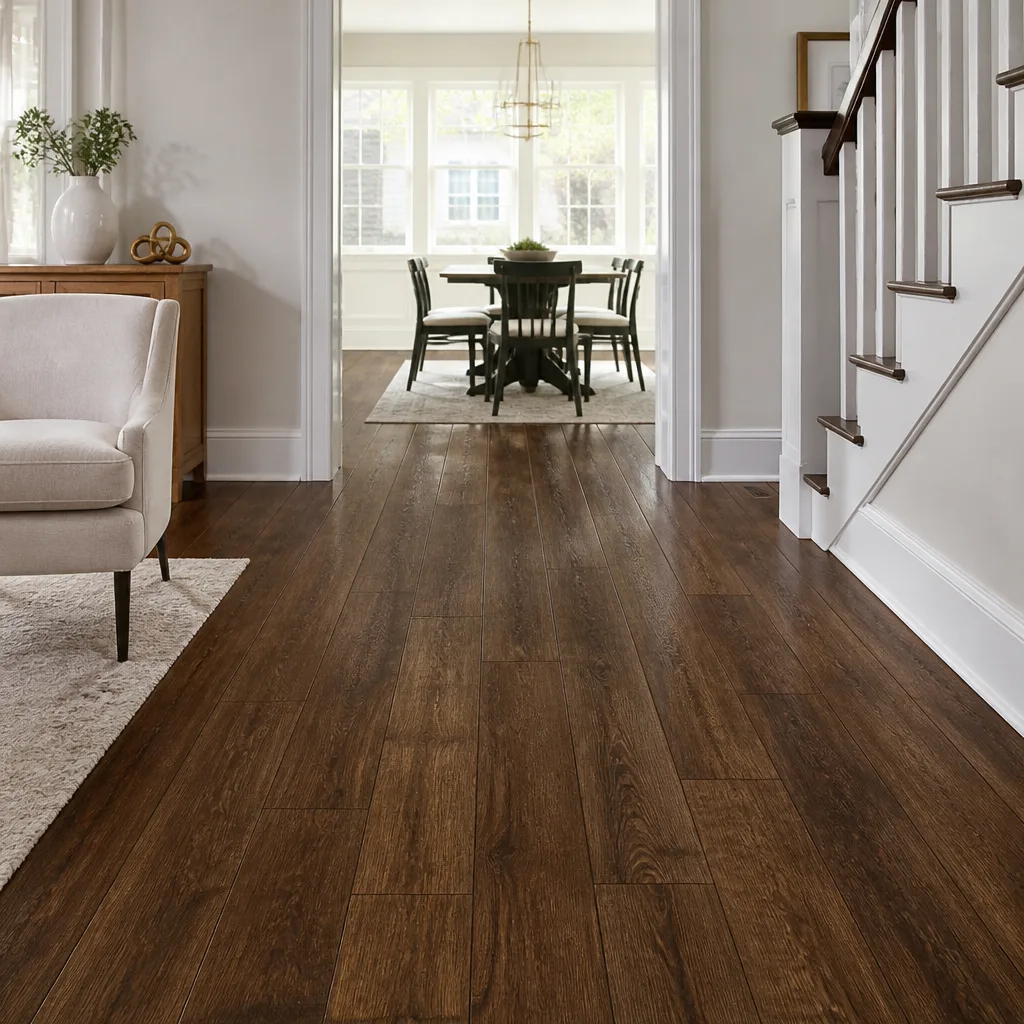 Mohawk
 COREtec
 Pergo
Free in-home measure and written estimate: Shaw, Mohawk, COREtec and Pergo lines compared on your own rooms, with carpet, tile, vinyl plank, laminate and hardwood laid out side by side
Get your free estimateHow to Hire a Flooring Contractor in Summerlin: A Step-by-Step Guide
Most Summerlin homeowners hire a flooring contractor the same way they hire a painter: get three names, compare the numbers, pick the middle one. That approach works fine for repainting a hallway. For flooring, it can cost you the entire floor. Here’s the part that surprises people – two contractors can quote the exact same price for the same room and install it two completely different ways, and only one of those ways survives a Summerlin summer on a concrete slab. The right installer for glue-down luxury vinyl plank is a different skill set than the right installer for nail-down hardwood over a wood subfloor. This guide teaches you how to match a contractor’s real experience to the specific installation method your floor demands, verify a Nevada C-16 flooring license in under five minutes, and read three bids side by side so you can see what each one actually includes.
Quick Answer
To hire a flooring contractor in Summerlin, verify their Nevada State Contractors Board license online (the C-16 classification, not a general handyman license), ask method-specific questions about floating LVP on slab, nail-down hardwood, or large-format tile with a Schluter system, and compare three written bids line by line for exclusions like transitions, substrate prep, and moisture testing. A legitimate contractor will show you the license, answer the method questions without hesitation, and put every inclusion and exclusion in the written estimate before the first box comes through the door.
Styles & brands we work with
- Hardwood
- Engineered hardwood
- Luxury vinyl plank
- Laminate
- Porcelain tile
- Carpet
- Shaw
- Mohawk
- COREtec
- Pergo
Table of Contents
- Step 1: Verify the Nevada C-16 License Before Anything Else
- Step 2: Match the Contractor to Your Installation Method
- Step 3: Ask the Questions That Separate Specialists from Generalists
- Step 4: Build an Apples-to-Apples Comparison Across Three Bids
- Step 5: Watch for Summerlin-Specific Red Flags
- Step 6: Check References and Warranty Terms That Actually Mean Something
- What Brand Access Tells You About a Contractor
- The Contract: What Belongs in Writing
Step 1: Verify the Nevada C-16 License Before Anything Else
Nevada requires flooring contractors to hold a C-16 classification, and that distinction matters more than most homeowners realize. A general handyman license or a general contractor’s B license does not automatically authorize flooring installation work in this state. The C-16 is the specific classification for flooring and floor covering, and it’s the one you should see on the paperwork. In our experience on Summerlin jobs, the accountability gap between a licensed and unlicensed crew doesn’t show up on install day. It shows up eighteen months later when the perimeter of a floating floor starts to gap and nobody answers the phone.
How to look it up on the NSCB database
- Go to the Nevada State Contractors Board website and open the license search tool. It’s free and public.
- Search by the contractor’s business name or license number – ask them for the number directly, and don’t accept “we’re licensed” as an answer.
- Confirm the license status is active, not expired, suspended, or pending.
- Check the classification field for C-16 (flooring). If you see a different classification, ask them to explain exactly what work it covers.
- Look at the license history section – a clean record with no disciplinary actions is what you want to see.
- Screenshot the result and save it. If a dispute ever comes up, you’ll have the record from the day you hired them.
This takes five minutes. It’s the single highest-value five minutes in the entire hiring process, and it’s the step almost everyone skips. A contractor who hesitates to hand over a license number is telling you something. In Summerlin, where a significant share of homes sit on post-tension concrete slabs, bonded and insured status isn’t a formality – it’s what protects you if a crew hits a tension cable during demo, which is a costly and genuinely dangerous mistake.
Ask for a certificate of insurance as a separate document from the license. General liability and workers’ comp are two different policies, and you want to see both with current dates. If the contractor can’t produce them quickly, move on.
Step 2: Match the Contractor to Your Installation Method
“Flooring contractor” is a broad label that covers a lot of different skill sets. A crew that installs carpet beautifully may have never set a large-format tile over a Schluter uncoupling membrane. A shop that runs nail-down hardwood every week might not understand the moisture requirements of a glue-down LVP on a slab-on-grade home. This is the core of hiring well in Summerlin: figure out what your specific floor needs, then confirm the contractor has actually done that exact method, recently and repeatedly.
Floating LVP on concrete slab
Floating floors on slab demand attention to substrate flatness, moisture, and expansion gaps – and Summerlin’s heat makes the expansion gap the one that bites. Ask how they handle expansion at walls, doorways, and long runs. Ask what they do about slab moisture before installing. No product instructions should be guessed at; the manufacturer’s spec for expansion and subfloor flatness governs, and a contractor who can’t tell you which spec applies to your product is guessing.
Nail-down hardwood on a wood subfloor
Nail-down hardwood over a wood subfloor needs a contractor who understands fastening patterns, acclimation, and how the subfloor is prepped. Ask what they check before the first board goes down, and how they decide whether the existing subfloor is ready. Acclimation timing depends on the product and the home – the product instructions and your written estimate should spell out what applies to your job, not a generic number a contractor throws out on the spot.
Large-format tile with a Schluter system
Large-format tile has tighter tolerances for lippage and substrate flatness than any small-format tile, and the uncoupling membrane system matters for whether the tile stays bonded. Ask specifically whether they’ve installed large-format tile over an uncoupling membrane, what size format is their typical job, and how they control lippage. A contractor who installs 12-inch tile but has never set a 24-by-48 panel is learning on your floor.
When you’re ready to talk specifics rather than theory, our tile flooring installation process covers the prep and bonding steps that determine whether grout lines stay straight over the years. The same principle applies to every other floor type.
Step 3: Ask the Questions That Separate Specialists from Generalists
Any contractor can say “we do flooring.” These questions are designed so that a specialist answers them without thinking, and a generalist starts hedging. Write them down before your estimate visit and take notes on the responses. The pauses tell you more than the answers.
- “Walk me through how you handle substrate prep on a post-tension slab.” A specialist describes what they check and how they protect the slab. A generalist says “we’ll see when we get there.”
- “What’s your process for acclimating hardwood before install?” The correct answer references the product instructions and your home’s conditions, not a number pulled from memory.
- “Have you installed large-format tile over a Schluter membrane on a job this size?” Vague “sure, lots of tile” is a red flag. You want specifics about format size and membrane type.
- “How do you test slab moisture, and what do you do with the results?” A contractor who doesn’t test slab moisture before installing a floating or glue-down floor is gambling with your money.
- “How do you detail transitions and thresholds at doorways?” If transitions are “not included,” you’ll either pay for them later or live with a gap.
- “Who’s actually on the install, and are they employees or subs?” Either answer can be fine. What you’re listening for is whether they know and whether the installers are accountable to the same license.
- “What does your workmanship warranty cover, in writing, and for how long?” A verbal “we stand behind our work” is not a warranty. Get the terms in the contract.
These questions also help you spot the right kind of specialist: someone who thinks in categories. A flooring specialist who handles carpet, tile, and hardwood refinishing can look at your whole home and match each room to the right surface. Bedrooms usually want the softness and warmth of carpet. Wet areas and entryways want tile. A hallway with original hardwood is usually worth refinishing rather than replacing, and a specialist who can sand, stain, and finish it in the same conversation is a different animal from a shop that only installs new material. Our carpet installation work is a good example – the right carpet for a Summerlin bedroom is chosen by how the room lives, not by what’s on sale.
Step 4: Build an Apples-to-Apples Comparison Across Three Bids
Three bids are only useful if you can line them up. Most homeowners can’t, because each contractor quotes in a different format and buries the exclusions. Build a comparison sheet before you get the bids, and make each contractor fill in the same line items. If a contractor won’t itemize, that’s your first data point.
What every bid should list separately
- All labor, by area (rooms, square footage)
- All material, with brand and product line named
- Demo and haul-away of the old floor
- Substrate prep and leveling compound, if needed
- Moisture testing on slab
- Transitions and thresholds at every doorway and exterior door
- Baseboard removal and reinstall, or shoe molding
- Trim, toe kick, and appliance reconnection
- Furniture moving (or a clear statement that it’s excluded)
- Workmanship warranty terms
Look for the exclusions first. The most common gaps in Summerlin bids are transitions, baseboard work, and substrate prep. A bid that’s $800 lower than the others but excludes transitions and floor leveling isn’t actually lower – it just moved those costs past the signature line. Ask each contractor to re-quote with all line items included so you’re comparing the same job.
What to do with “we’ll know more once we pull the old floor”
This is a fair statement. Nobody knows what’s under a 20-year-old floor until it’s up, and pretending otherwise is how you end up with a surprise invoice. The right response is to control the process: ask each contractor to state their hourly rate or square-foot rate for unforeseen substrate work, in writing, before you sign. Ask what triggers a change order and how you’ll be notified. A contractor who can’t tell you what extra prep costs per square foot until they start is a contractor who will name the number at the moment you have the least leverage. Get the rate up front, then trust them on the scope.
For a sense of how a full install is structured from measure to final walkthrough, our flooring installation Summerlin process shows the estimate-to-install sequence you should expect from any contractor you hire.
Step 5: Watch for Summerlin-Specific Red Flags
Summerlin homes create a specific set of conditions that a good contractor anticipates and a careless one ignores. The desert climate is hard on floors in ways that flooring hubs like the Midwest and the Southeast don’t see: dry air, intense sun through west-facing windows, and large portions of the valley sitting on slab rather than crawl space. When you meet a contractor, listen for whether they raise these conditions before you do.
- Skipping moisture testing on slab. Concrete slabs in the desert can still carry moisture from below, and a floating or glue-down floor over an untested slab can cup, gap, or lift. Ask when they test, and whether it’s in the bid. If they say “you don’t need that here,” keep looking.
- Ignoring acclimation for hardwood. Nevada’s dry air is not the same as the humidity where the wood was manufactured. A contractor who skips acclimation or waves off the question doesn’t understand hardwood. The correct answer points to the product instructions and your home’s conditions.
- Quoting transitions and thresholds as “not included.” This is the single most common hidden cost in Summerlin bids. Every doorway, every exterior door, every transition between carpet and tile – all of it should be itemized.
- No plan for sun exposure. West- and south-facing rooms in Summerlin take a lot of UV. Ask how they’ll recommend products for those rooms based on how the floor will actually live there.
- Vague talk about the “foundation.” Post-tension slab homes require care during demo. Ask how they find and avoid tension cables. A crew that doesn’t know what post-tension means is a crew you shouldn’t hire.
- Rushing the estimate. A good estimate visit in Summerlin takes time – measuring, checking the subfloor, discussing rooms, and looking at how the home lives. A ten-minute walkthrough that ends with a number is not an estimate.
These aren’t hypothetical. In our experience, the difference between a floor that looks good in year one and a floor that still looks good in year ten is almost entirely these prep steps. The install itself is craftsmanship, but the longevity is decided before the first board is placed.
Step 6: Check References and Warranty Terms That Actually Mean Something
Reference checks are the step where most homeowners get lazy. They ask for two references, call one, and hear a polite “yeah, they were fine.” That tells you nothing. Ask for references from jobs that match yours: same install method, same substrate type, similar home age. Then ask the reference specific questions.
- Ask for at least three references, and specify the install method you’re having done.
- Ask how long ago the work was completed. A two-year-old reference tells you far more than a two-month-old one.
- Ask whether the final invoice matched the written estimate, and if not, why.
- Ask whether the reference needed the contractor to come back, and if so, how quickly and how well they handled it.
- Ask if they’d hire the same contractor again for the same type of floor.
Warranty questions need the same specificity. There are two warranties on every flooring job, and you need to understand both: the material warranty from the manufacturer (which covers the product) and the workmanship warranty from the contractor (which covers the installation). Manufacturer warranty terms vary by product – never accept a verbal summary, read the terms yourself, and confirm what the product instructions and the written estimate say about your specific job. Workmanship warranty terms vary by contractor, so get them in writing: what’s covered, for how long, what voids it, and who performs the repair. A contractor who stands behind their work after final payment clears will put the workmanship warranty in the contract without being asked.
If you’re comparing surface options before you hire, our guide to Sandy Valley runs through how climate and housing type shape flooring choices in a similar desert setting – useful context for what to expect closer to home.
What Brand Access Tells You About a Contractor
Brand access is a useful signal, but not for the reason most people think. It’s not that a certain brand is inherently better – it’s that a contractor who carries well-recognized manufacturers across multiple flooring categories can have an honest conversation about product fit without steering you toward whatever they happen to have. Big-box stores sell flooring as a commodity. A specialist who works with a portfolio of named brands applies hands-on craft to make each product perform as designed, and that’s a different relationship.
When a contractor works with brands like Shaw and Mohawk for carpet, Armstrong for resilient and hardwood-adjacent product lines, Daltile for tile, and Karndean for premium luxury vinyl plank, they can compare true alternatives in one conversation instead of sending you to five stores. Our own portfolio spans nine manufacturers – Shaw, Mohawk, COREtec, Pergo, LifeProof, Mannington, Armstrong, Daltile, and Karndean – and that breadth is exactly what lets us tell a homeowner honestly when a more affordable product will do the job and when a premium one is worth the difference. We’re not an exclusive dealer for any of them, and we don’t present ourselves as one. What we offer is the comparison.
Ask a contractor you’re vetting which brands they work with and why they’d recommend each for your specific rooms. A specialist talks about how a product performs on a slab, how it handles sun, and how it fits the room. A commodity seller talks about price per square foot and nothing else. Our Flooring Installation Summerlin approach is built around that first conversation, because the product selection and the installation method are the same decision.
The Contract: What Belongs in Writing
Nevada requires a written contract for home improvement work above a certain dollar threshold, and regardless of the exact threshold, every flooring job should get one. The written contract is what protects you when the crew is done and gone. A handshake and a text message confirmation don’t hold up if there’s a dispute six months from now. Insist on a contract regardless of the size of the job – the bigger the install, the more important it is, but every job deserves one.
- Full scope of work, room by room and method by method
- All products named by brand and product line
- Exact pricing, and the line items that add up to it
- Change order process and per-square-foot or hourly rates for unforeseen substrate work
- Payment schedule tied to milestones, with the final payment due after your walkthrough and sign-off, not before
- Workmanship warranty terms, in full
- Timeline commitments and the conditions that can shift them (the schedule is set at the estimate, not during)
- Contractor’s C-16 license number and current insurance certificate attached
Read the contract before you sign it, out loud if that helps. If any term feels vague, ask for it in writing. A contractor who’s confident in their process won’t push back on that request. In our experience, the written estimate is where the price gets set, and the contract is where the accountability gets set. Both should be in your hands before the first box of flooring arrives.
Common Mistakes to Avoid
- Hiring on price alone. The lowest of three bids is usually the one with the most exclusions. Compare line items, not totals, or you’re comparing different jobs.
- Skipping the C-16 license verification. Nevada requires flooring contractors to carry this classification, and checking the NSCB database takes five minutes. Skipping it means you’re trusting a verbal claim instead of a public record.
- Not asking about the install method specifically. “Do you install LVP?” is the wrong question. “How do you handle floating LVP over a post-tension slab in a Summerlin home?” gets you an answer that matters.
- Assuming transitions are included. Transitions and thresholds are the most common exclusion in Summerlin bids. Every doorway, every change of material, should be itemized before you sign.
- Not asking for a per-square-foot rate on substrate surprises. “We’ll know more once we pull the floor” is honest, but only if you’ve locked the rate for extra prep before you start.
- Accepting a verbal workmanship warranty. If it’s not in the contract, it doesn’t exist. Ask what’s covered, for how long, and who performs the repair.
- Rushing the estimate visit. A proper estimate includes measurements, subfloor inspection, a moisture conversation, and a walkthrough of how each room lives. If it takes ten minutes, it’s not an estimate.
See the difference
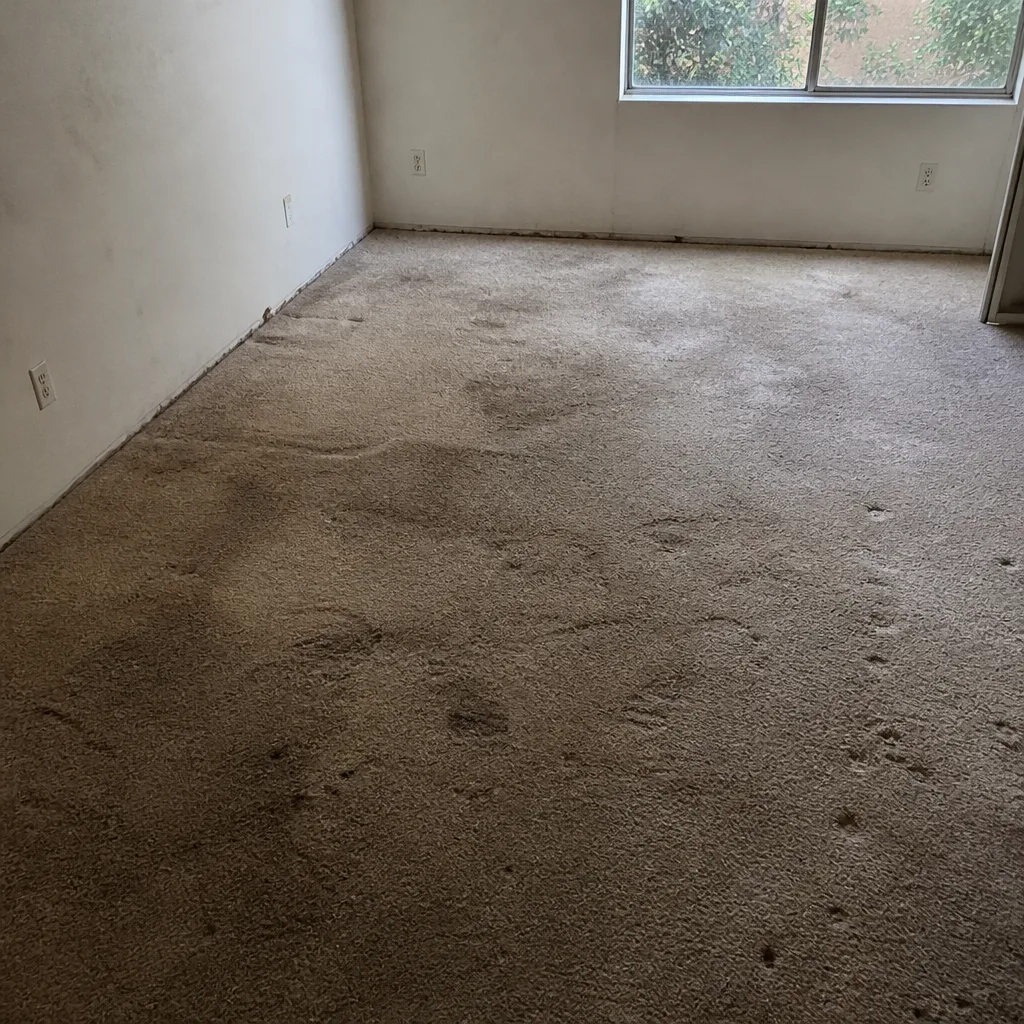 Before
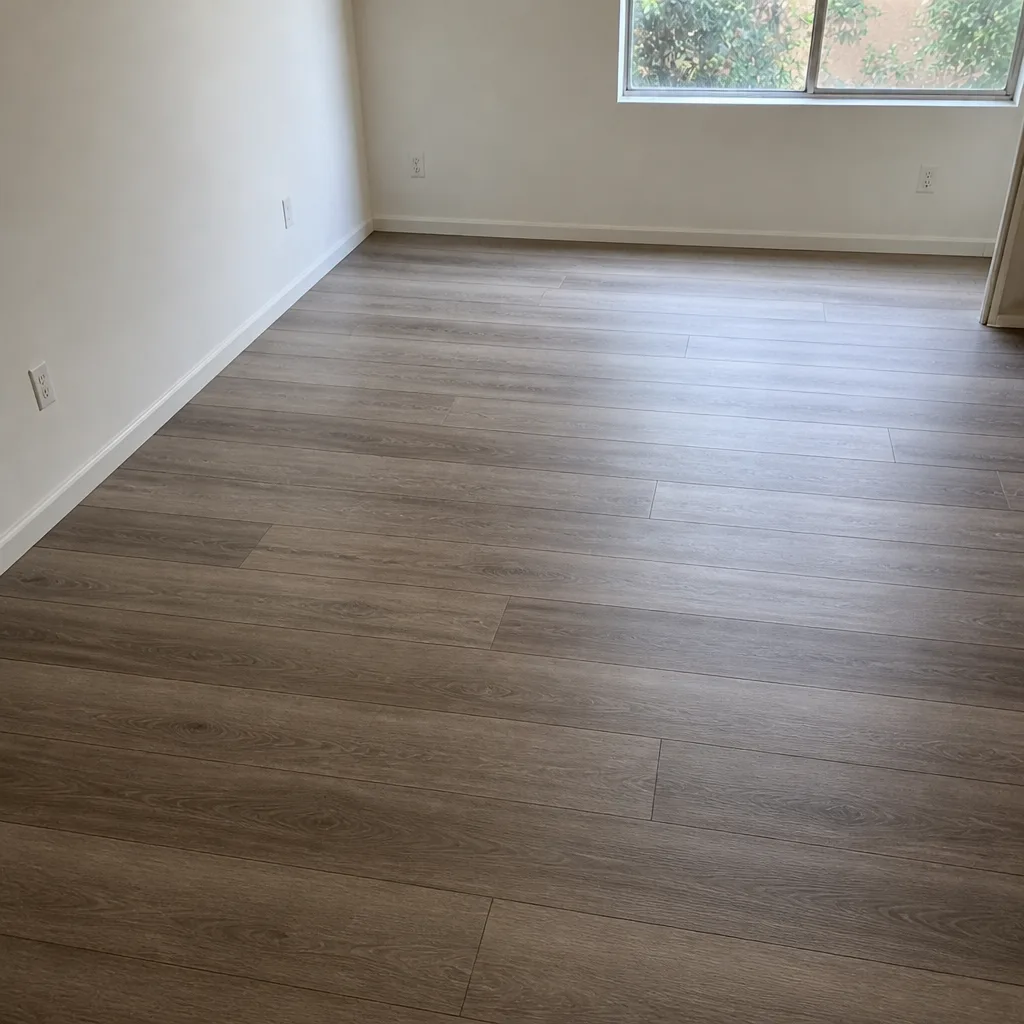 After
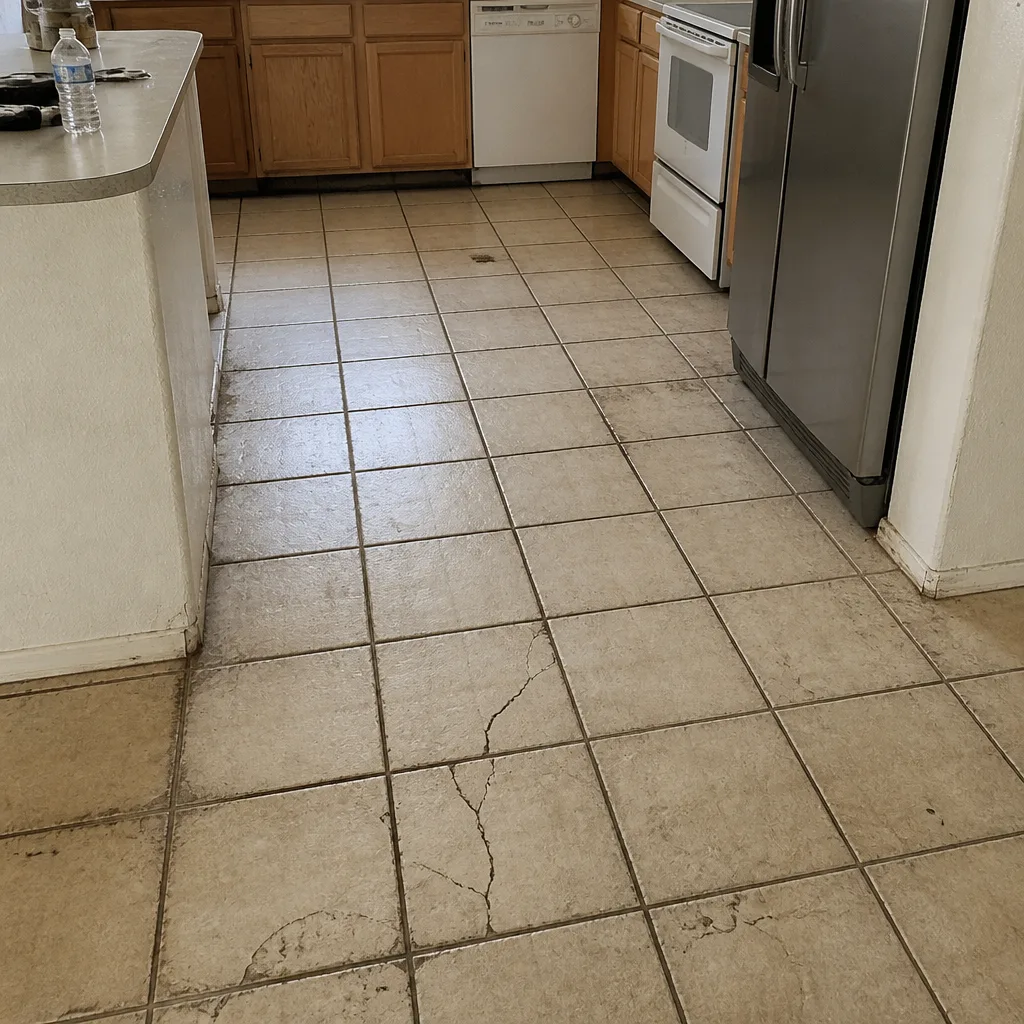 Before
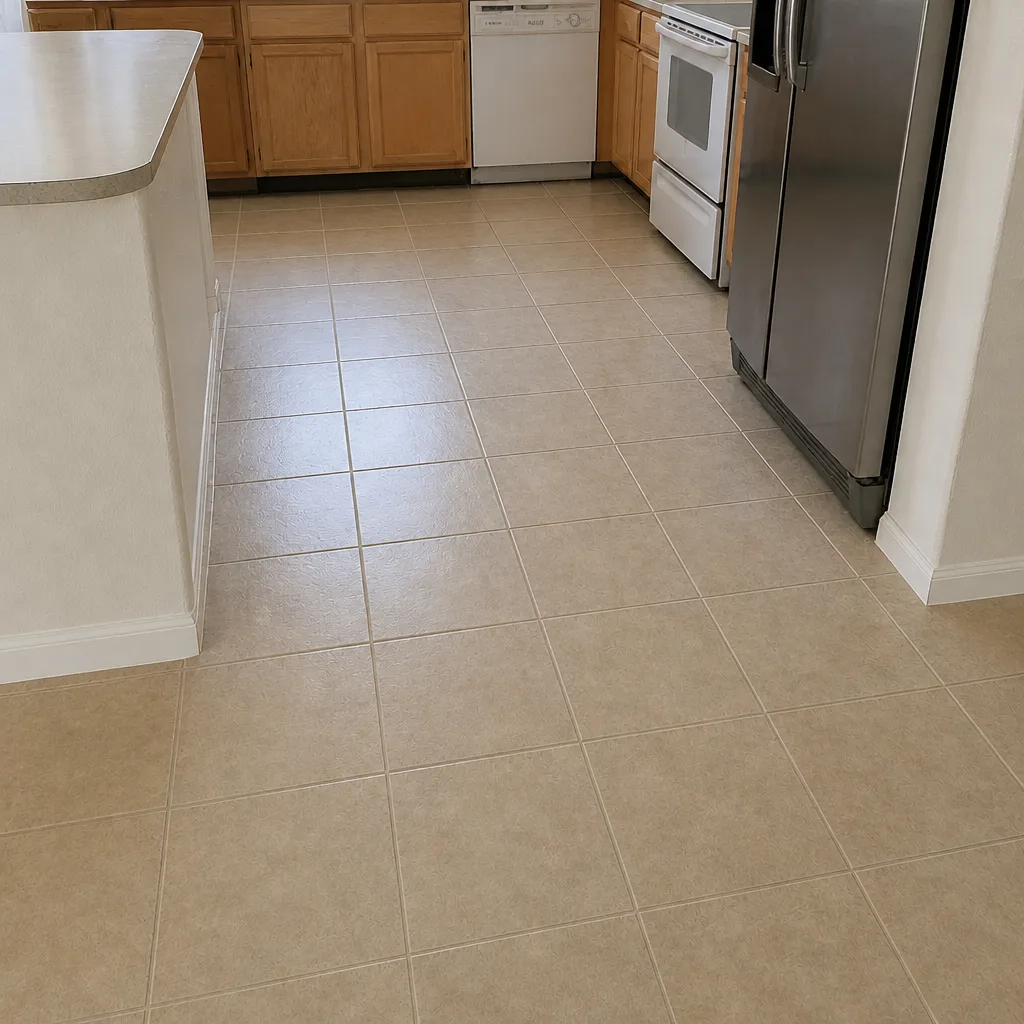 After
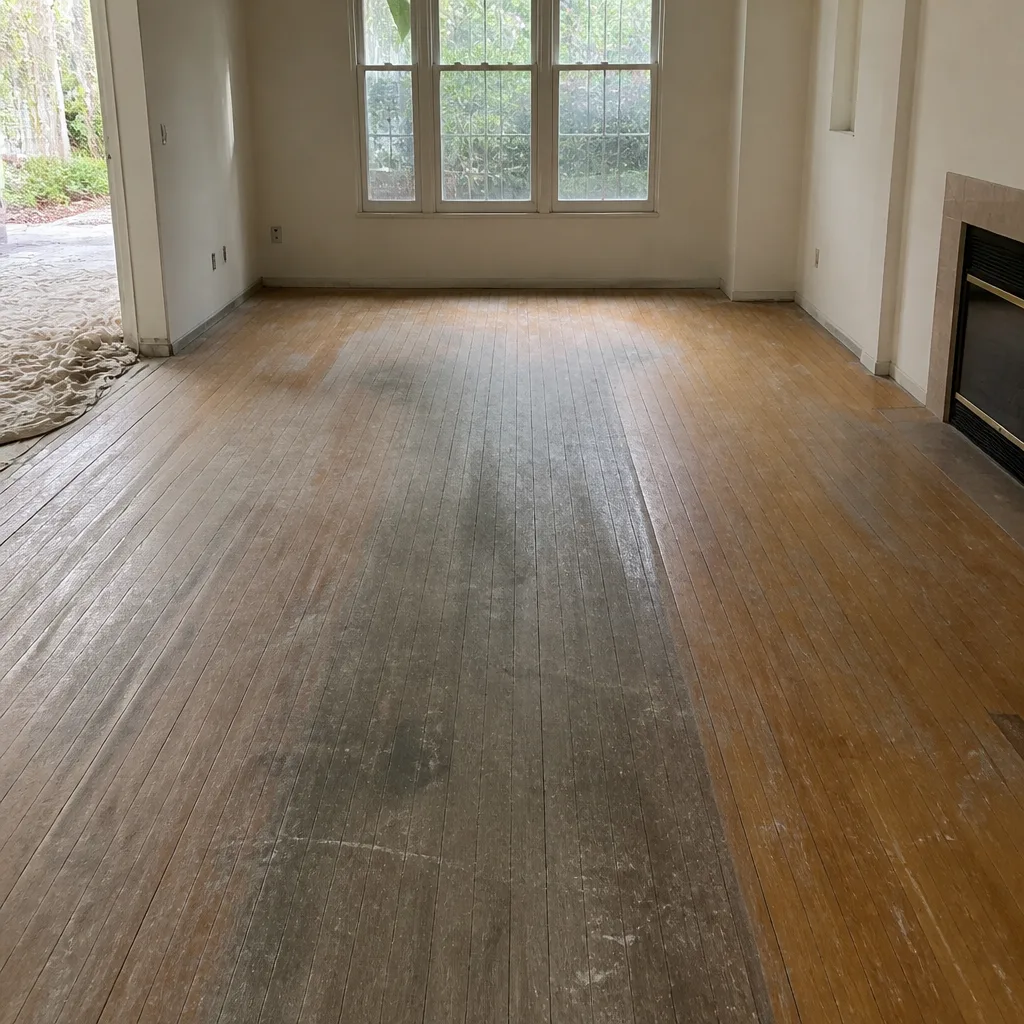 Before
 After
When to Call a Professional
Some decisions are clear. If your existing floor is showing cupping, gaps at the seams, or movement underfoot, call a professional before it gets worse – flooring failures compound, and the earlier they’re diagnosed the cheaper they are to fix. If you’re considering hardwood refinishing, refinishing rather than replacing is often the smart, value-conscious option, but only a professional can assess whether your existing wood has the thickness and condition to be sanded and refinished. That’s a judgment call made at the estimate visit, not over the phone. If your home sits on a slab and you’re planning any floating floor, call before you buy material – slab moisture testing and substrate prep need to happen before the product is ordered, not after. And if you’ve already received a bid that excludes transitions, prep, or moisture testing, get a second opinion before you sign. Flooring Installation Summerlin offers free estimates in Summerlin – call (844) 320-7082. Our technicians have up to 9 years of experience, and we can walk through your specific rooms and install methods before you commit to anything.
Frequently Asked Questions
Look up the contractor’s license number on the Nevada State Contractors Board website and confirm the status is active with a C-16 flooring classification. Ask the contractor for the license number directly, search the public database, and save a screenshot of the result. A general handyman license does not cover flooring work in Nevada, so the C-16 is the classification you’re looking for. If a contractor won’t provide a number for you to verify, call (844) 320-7082 for a free estimate from a licensed contractor instead.
Pricing in Summerlin depends on the installation method, the product selected, and the condition of the existing subfloor, so there’s no single market number. The estimate visit is where the price gets set: a contractor measures, inspects the slab or subfloor, and discusses brand and product options before quoting. Estimates should always be free and written. Call (844) 320-7082 to schedule your free estimate and get an exact number for your rooms.
Ask how they test for slab moisture, how they handle substrate preparation on a post-tension slab, and how they detail expansion gaps at walls and doorways. The right answers reference the product instructions and the specifics of your home, not a generic number. A contractor who doesn’t test slab moisture before installing a floating floor is taking a risk with your investment. Call (844) 320-7082 to talk through your specific slab and install method – estimates are free.
Sometimes, but it depends on the thickness of the wood and its current condition, which is checked at the estimate visit. Refinishing keeps original wood floors alive and is often a value-conscious alternative to full replacement when the wood has enough material left to sand. A specialist who sands, stains, and finishes hardwood in-house can give you an honest assessment – most flooring installers outsource or skip refinishing entirely. Call (844) 320-7082 for a free evaluation of your hardwood before you decide.
Because they’re usually quoting different scopes, not different prices for the same job. Lower bids often exclude transitions, substrate prep, baseboard removal, or moisture testing, and those excluded costs surface after you sign. Ask every contractor to itemize the same list of line items so you can compare honestly. If a bid won’t itemize, that’s a signal worth listening to. Call (844) 320-7082 for a free, fully itemized written estimate.
Yes. Our estimates are free and come with a written quote, not a vague verbal number. The written estimate sets the price – there’s no service-call fee, no trip charge, and no obligation to book. We answer 24/7, with fast dispatch from 7am to 7pm, Sunday through Friday. Call (844) 320-7082 to schedule your free estimate in Summerlin.
The Bottom Line
Hiring a flooring contractor in Summerlin is a product-knowledge test more than a price comparison. Verify the C-16 license on the NSCB database first, then match the contractor’s actual experience to your specific installation method – floating LVP on slab, nail-down hardwood, or large-format tile with an uncoupling membrane. Ask method-specific questions, compare three bids line by line with exclusions in front of you, lock in a per-square-foot rate for unforeseen substrate work, and get the workmanship warranty in writing. Watch for the Summerlin-specific red flags: skipped moisture testing, ignored acclimation, and transitions quoted as “not included.” Do those steps and you’ll be able to tell the specialist from the generalist before the first box is opened.
Whether you’re refreshing one room or reflooring a whole home, we’d welcome the chance to walk through it with you. Flooring Installation Summerlin offers free estimates in Summerlin – call (844) 320-7082. We answer 24/7, with fast dispatch from 7am to 7pm, Sunday through Friday.
Written by the team at Flooring Installation Summerlin.